














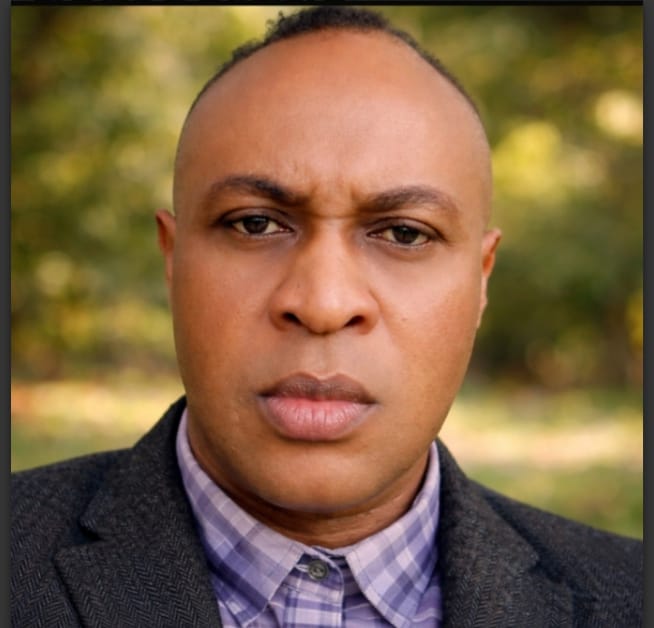
By Daniel Nduka Okonkwo
As Nigeria approaches the 2027 presidential and National Assembly elections, the debate over electoral integrity must extend beyond political parties, candidates, campaign promises, and the Independent National Electoral Commission (INEC). There is another dimension of accountability that political leaders cannot afford to ignore: the capacity of foreign governments, particularly the United States, to deploy legislative, diplomatic, financial, and security instruments against individuals and institutions implicated in serious abuses.
Washington does not have to accept the credibility of a disputed Nigerian election simply because INEC has declared a winner. Nor does it have to remain diplomatically silent when credible evidence points to widespread electoral manipulation, voter intimidation, or other serious violations. The United States can challenge such conduct through diplomatic engagement, public condemnation, targeted visa restrictions, financial sanctions where applicable legal conditions are met, and scrutiny of bilateral security assistance. It can also raise concerns through congressional oversight and other established foreign-policy mechanisms. The central question is whether Washington will be prepared to use these instruments consistently and decisively where the evidence warrants action, and whether such pressure can help strengthen accountability in a country where electoral violations have too often attracted inadequate consequences.
Nigeria’s 2023 presidential election offers an important illustration of Washington’s diplomatic approach. On 1 March 2023, the United States Department of State congratulated Nigerians and President-elect Bola Ahmed Tinubu following INEC’s declaration. However, Washington also acknowledged widespread frustration over the conduct of the election, particularly shortcomings in the technical arrangements introduced for the presidential poll.
The United States recognised Nigerians’ right to question those shortcomings, urged INEC to improve its electoral processes, and encouraged candidates and political parties to pursue disputes through established legal mechanisms. This was neither an unqualified endorsement of the electoral process nor a rejection of the declared result. It was a diplomatic position that recognised the official declaration while acknowledging serious concerns about the credibility and administration of the election.
The technical failures surrounding INEC’s Result Viewing Portal (IReV) remain particularly significant. The platform was expected to strengthen transparency by allowing polling-unit results to be uploaded and viewed publicly. Instead, delays and failures in transmitting presidential election results generated widespread public distrust.
The European Union Election Observation Mission and the Commonwealth Observer Group documented shortcomings in the electoral process, including problems associated with IReV and the Bimodal Voter Accreditation System (BVAS). The Commonwealth’s final assessment identified these failures as factors that undermined the transparency, credibility, and inclusiveness of the elections. These were not merely political complaints by disappointed candidates. They were documented administrative and technological failures with serious implications for public confidence in the electoral process.
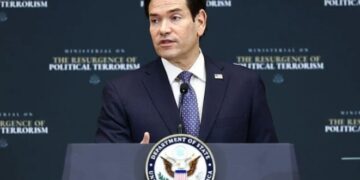
Washington’s response did not end with diplomatic criticism. On 25 January 2023, then United States Secretary of State Antony Blinken announced visa restrictions against individuals believed to have undermined Nigeria’s democratic process. The announcement invoked Section 212(a)(3)(C) of the United States Immigration and Nationality Act, which provides a foreign-policy basis for visa ineligibility.
On 15 May 2023, Blinken announced further steps to impose restrictions on individuals involved in voter intimidation through threats and physical violence, manipulation of vote results, and other activities undermining Nigeria’s democratic process during the election cycle.
The United States kept the identities of the affected individuals confidential. These were actual government announcements, not hypothetical threats or political campaign rhetoric. They established a documented precedent for targeted diplomatic consequences against individuals implicated in electoral interference.
The implications extend beyond the immediate inconvenience of being unable to travel to the United States. For public officials, political actors, and influential individuals whose international engagements involve business, education, diplomatic relationships, and family travel, visa restrictions can carry significant personal and reputational consequences.
However, responsible reporting requires a distinction between what Washington confirmed and what remains unknown. The United States did not publicly identify the affected Nigerians or disclose their individual cases. Nor does the published policy establish that every person involved in electoral malpractice would automatically face restrictions or that family members of affected individuals would necessarily be sanctioned. The significance is that targeted consequences are possible, not that every suspected electoral offender has already been punished.
A more recent development in the United States Congress provides another dimension to this investigation. On 10 February 2026, Representative Christopher H. Smith introduced the Nigeria Religious Freedom and Accountability Act of 2026, known as H.R. 7457, with Riley Moore and other lawmakers as co-sponsors. The proposed legislation was referred to the House Foreign Affairs and House Judiciary Committees.
Its stated purpose is to require a comprehensive report on the United States efforts to address religious persecution and mass atrocities in Nigeria. The bill also addresses the country’s religious-freedom status, security assistance, and accountability. It is important to establish that H.R. 7457 is proposed legislation, not an enacted law. Its significance lies in the formal congressional scrutiny and policy pressure it represents.
The proposed legislation deserves particular attention because it identifies specific accountability mechanisms. Its provisions call for targeted sanctions, including visa restrictions and asset freezes under the Global Magnitsky Human Rights Accountability Act, against individuals and entities considered responsible for serious religious-freedom violations. It also provides for reporting to Congress where such sanctions have not been imposed.
The bill further proposes reporting on individuals and entities sanctioned or being considered for sanctions, alongside an assessment of whether American security assistance risks enabling or worsening religious persecution. These provisions must be understood within their actual scope: religious persecution and mass atrocities, not electoral malpractice as such. Equally important.
The financial implications deserve closer examination. Under the Global Magnitsky Human Rights Accountability Act, the United States possesses authority to impose targeted sanctions, including blocking property and financial interests within its jurisdiction and restricting entry into the country, against persons who meet the applicable legal criteria.
Where blocking sanctions apply, property within the United States jurisdiction, or within the possession or control of United States persons, may be frozen, and transactions involving designated persons restricted. Such measures can affect individuals with financial interests connected to American institutions and international business networks.
However, it would be inaccurate to suggest that every Nigerian politician with foreign investments is automatically vulnerable to asset freezing. A lawful basis, a relevant designation, and applicable administrative procedures are required. The investigative question is whether these accountability mechanisms are being adequately deployed against individuals credibly implicated in serious human-rights abuses and corruption.
Another important instrument is the American security-assistance framework. Nigeria has substantial security challenges and has acquired American military equipment, including A-29 Super Tucano aircraft, as part of its efforts to combat terrorism and other threats. Such cooperation creates important bilateral interests, but it does not give Nigeria unrestricted access to American military assistance.
The Leahy Laws prohibit the United States from providing certain forms of assistance to foreign security-force units where credible information implicates those units in gross violations of human rights. These restrictions apply to the relevant units, not automatically to an entire national military or government. Assistance may resume where the applicable corrective conditions are met.
Crucially, an election dispute or allegation of vote manipulation does not, by itself, trigger a Leahy Law prohibition. The relevant issue is whether a recipient security unit has committed a qualifying human-rights violation. This distinction matters because the existence of security cooperation does not remove the human-rights obligations attached to it.
Beyond the Leahy framework, congressional control over appropriations provides Washington with another significant instrument. The Consolidated Appropriations Act, 2026, enacted as Public Law 119-75, contains a specific provision concerning Nigeria.
Under Section 7060(e), half of certain funds appropriated under Titles III and IV and made available for assistance to Nigeria’s central government may not be obligated until the Secretary of State certifies to the relevant congressional committees that the Nigerian government is taking effective steps to prevent and respond to violence, hold perpetrators accountable, prioritise support for victims and internally displaced persons, facilitate the safe return and reconstruction of affected communities, and allocate sufficient resources to these objectives.
The law also prioritises assistance for atrocity prevention, religious freedom, investigations and prosecutions, and accountability within the police and security forces. This is an enacted funding restriction, not merely a proposal. However, it is not a blanket suspension of all American military or economic assistance to Nigeria. Its conditions concern violence and civilian protection rather than electoral malpractice directly.
The question of international financial scrutiny also deserves attention. The United States Treasury’s Financial Crimes Enforcement Network (FinCEN) operates within an extensive anti-money-laundering framework involving financial intelligence, suspicious-activity reporting, and cooperation with financial institutions.
Politically Exposed Persons (PEPs), including senior public officials and certain people connected to them, may attract enhanced scrutiny under applicable financial due diligence requirements because their positions can expose them to particular corruption risks. This does not mean that every politically exposed Nigerian is suspected of wrongdoing, nor does it mean that FinCEN automatically freezes their foreign assets. Enhanced scrutiny is not proof of criminal conduct, and suspicious-activity reporting is not a conviction.
Nevertheless, unexplained wealth, suspicious transactions, and financial relationships potentially connected to corruption can attract regulatory and law-enforcement attention. For Nigerian public officials, the broader lesson is that international financial accountability cannot be treated as a matter confined to domestic institutions.
Yet international pressure will mean little if Nigerians themselves cannot independently establish what happened at their polling units. This is where Parallel Vote Tabulation (PVT), independent domestic observation, and systematic collection of polling-unit results become essential.
The Commonwealth Observer Group’s report on the 2023 elections documented that more than 4,500 citizen observers were involved in parallel vote tabulation and data clerking for situation rooms organised by Yiaga Africa and other civil society organisations. These independent efforts provide an important means of comparing observed polling-unit results with officially announced outcomes.
They also demonstrate that credible electoral monitoring is not exclusively the responsibility of foreign governments or international observer missions. Nigerian citizens and domestic organisations are central to the process.
There is an important historical development here that deserves greater public attention. In testimony submitted to the United States Senate Committee on Foreign Relations in 2023, a State Department official reportedly explained that the nationwide results of Yiaga Africa’s Parallel Vote Tabulation closely tracked the officially announced presidential results, despite inconsistencies identified in two states.
Yiaga Africa deployed 3,014 citizen observers to randomly selected polling units across the country. The testimony reportedly stated that the identified inconsistencies were not sufficient to affect the nationwide outcome. It also acknowledged significant logistical and technical shortcomings in the electoral process, including delays in uploading scanned result sheets to the public results portal.
This distinction is important: independent verification can support an assessment of nationwide results without erasing documented failures, irregularities, or legitimate concerns about electoral administration. It also demonstrates why credible domestic observation matters.
For Nigeria’s 2027 elections, the implications are substantial. INEC must demonstrate that its technological systems are reliable, transparent, and capable of delivering results in accordance with the Constitution and the Electoral Act. Security agencies must protect voters, candidates, election officials, journalists, and observers without becoming instruments of political intimidation.
Political parties must respect the law, while the judiciary must remain accessible and independent in resolving electoral disputes. International observers and foreign governments can provide scrutiny, but they cannot replace the responsibilities of Nigerian institutions. Equally, citizens must preserve polling-unit evidence, report intimidation, participate in lawful observation initiatives, and demand accountability through established institutions.
The credibility of an election must be established through verifiable evidence, not simply announced by those who control the machinery of the process.
Nigeria’s democracy cannot depend on whether Washington chooses to impose visa restrictions, freeze assets, condition assistance or issue another diplomatic statement. Those instruments may create consequences where domestic accountability fails, but they are not substitutes for Nigerian sovereignty or effective democratic institutions.
The United States has demonstrated that it can recognise an officially declared winner while simultaneously criticising electoral shortcomings and announcing targeted consequences against individuals accused of undermining democracy. Its legislative and appropriations measures provide additional avenues through which international scrutiny can influence the bilateral relationship.
The responsibility for protecting Nigeria’s democracy, however, remains with Nigerians. The ballot belongs to the voter, the electoral mandate belongs to the people, and no political officeholder should be permitted to treat public power as immunity from accountability.
The world may be watching Nigeria, but it is Nigerians who must ensure that their votes count and that those who violate their democratic rights are held accountable.
Daniel Nduka Okonkwo is an investigative journalist, human rights advocate, and policy analyst based in Nigeria. He is the founder and publisher of Profiles International Human Rights Advocate (PIHRA), a platform documenting the courage of human rights defenders and examining issues of governance, accountability, security, and fundamental rights.
His reporting on Nigerian governance, security-sector accountability, public finance, and human rights has appeared in Sahara Reporters, Vanguard, Daily Trust, African Defence Forum, Opinion Nigeria, and Daily Intel.
Read more of his work on the PIHRA website:
https://www.profilesinternationalhumanrightsadvocate.com.ng/
For tips, feedback, or collaboration, contact him at dan.okonkwo.73@gmail.com.