


















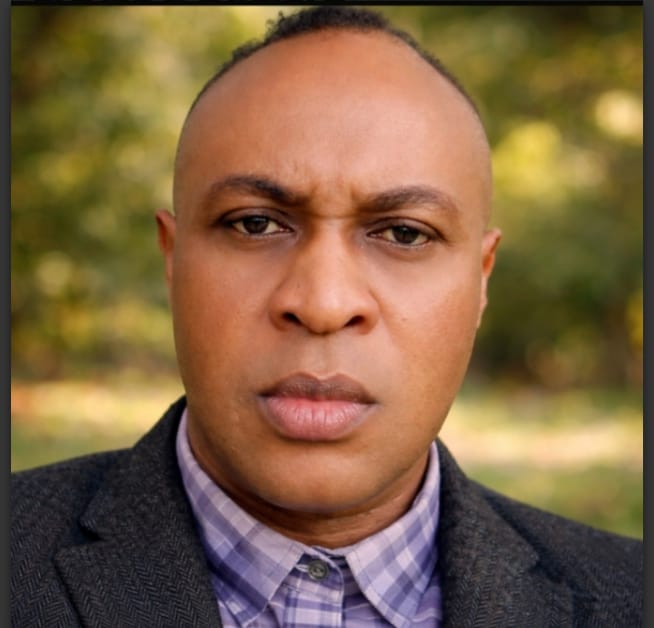
By Daniel Nduka Okonkwo
Politics is supposed to be a call to public service. In Nigeria, however, it has increasingly become something far more complicated: a fiercely competitive struggle for access to power, public resources, influence, and political patronage. That transformation has a devastating consequence. When political office becomes more attractive for the wealth and privileges attached to it than for the opportunity to serve citizens, the purpose of government begins to change. Politics becomes a business. And when politics becomes business without the discipline, transparency, and accountability expected of legitimate business, the citizens become the ones who pay the price.
This is the uncomfortable question Nigeria must confront. How can a country remain poor when its political class has access to enormous public resources, while millions of citizens still struggle to obtain electricity, healthcare, quality education, security, clean water, and decent employment? The World Bank’s recent assessment of Nigeria points to this contradiction. Despite progress in economic growth and domestic revenue mobilisation, the Bank continues to identify widespread poverty, high food inflation, and structural barriers to inclusive growth, while stressing the need for more efficient public spending and stronger fiscal transparency. Meanwhile, UNICEF’s Nigerian Child 2025 Report announcement says that two out of every three Nigerian children, approximately 67 percent, live in multidimensional poverty, while 10.2 million children are out of school. These are not merely economic statistics. They are evidence of a country in which millions of citizens are still waiting for the most basic dividend of government.
Nigeria’s problem is not that people enter politics. A democratic society needs politicians. The problem begins when political office becomes the principal route to wealth accumulation, social status, and economic survival. A politician who regards public office as a temporary responsibility should be prepared to leave office and return to productive work. But where political power becomes the gateway to contracts, appointments, influence, patronage, and access to public resources, the incentive changes. The contest is no longer simply about who can govern. It becomes a contest over who controls the machinery through which public resources are distributed. That is when politics becomes a dirty business.
The danger is not confined to the politician who allegedly steals public money. It is also found in the wider system that can reward loyalty over competence, political connection over merit, and electoral spending over ideas. A country cannot build strong institutions when access to opportunity depends primarily on proximity to political power.
The tragedy is that the ordinary Nigerian ultimately finances this political system. The citizen pays taxes. The citizen pays electricity bills. The citizen pays school fees. The citizen pays for private security because public security is inadequate. The citizen pays medical bills because public healthcare often cannot meet demand. The citizen pays transport costs inflated by poor infrastructure. And when public services fail, the citizen pays again to obtain privately what the government was supposed to provide publicly.
This is the cruel paradox. The Nigerian state has seen significant increases in public revenues in recent years, yet millions of Nigerians continue to live without reliable access to basic services. The World Bank has reported substantial improvements in revenue mobilisation while stressing the need to improve the efficiency and transparency of public spending and ensure that economic gains translate into better living standards. The question, therefore, is not simply how much money Nigeria generates. The question is where does the money go?
Perhaps the most disturbing feature of Nigerian politics is the possibility that poverty itself can become politically useful. A hungry citizen is easier to persuade with a small cash payment. A jobless graduate can become dependent on political patronage. A community without infrastructure can be mobilised with promises of a road, a borehole, or an electricity project. A struggling family may see a bag of rice during an election campaign as immediate relief rather than ask why it needs political charity in the first place.
This creates a dangerous cycle. Citizens need the government because they are poor. Political actors can benefit electorally when citizens remain economically dependent, because dependency can translate into political influence. That is how poverty can become more than an economic problem. It can become a political instrument. The ultimate objective of democratic government should be to create citizens who are economically independent enough to demand accountability, not citizens who must wait for politicians to distribute temporary relief.
Nigeria’s political crisis is also a crisis of values. For decades, the country has struggled with a culture in which visible wealth can command greater respect than demonstrated public service. Political power can become a shortcut to social status. Government contracts can become symbols of influence. Appointments can become instruments of patronage. Political networks can become more valuable than professional qualifications. When this happens, politics attracts people who see government not principally as an institution for serving society but as an opportunity for personal advancement. That is the politics of primitive wealth accumulation, and it is expensive.
Every naira that is wasted, diverted, inflated through procurement, or allocated without adequate accountability represents resources that could otherwise contribute to schools, hospitals, roads, power infrastructure, water systems, agricultural development, or productive employment. The issue is not that every politician is corrupt. They are not. The issue is whether Nigeria’s political and institutional system creates sufficient incentives to reward public service and sufficient consequences for the abuse of public resources.
Nigeria’s insecurity makes the problem even more frightening. Kidnapping, banditry, terrorism, and communal violence have destroyed livelihoods, displaced communities, and disrupted education. UNICEF reports that 10.2 million Nigerian children are out of school, while its broader reporting continues to document serious challenges involving violence, displacement, and access to essential services. Insecurity is therefore not merely a security problem. It is an economic problem.
A farmer driven from his land produces less food. A trader who cannot safely travel loses business. A company whose employees fear kidnapping faces higher operating costs. A community that cannot guarantee the safety of its children loses educational opportunities. A country that cannot guarantee security struggles to attract and retain productive investment. And every year insecurity persists, another generation pays the price. That is why the question of accountability for security spending cannot be treated as an abstract political argument. Nigerians have a legitimate interest in knowing whether the enormous resources allocated to security are producing corresponding improvements in safety.
Politicians sometimes speak about Nigeria’s poverty as though it were an unavoidable natural disaster. It is not. Some of Nigeria’s problems are caused by global economic conditions. Some are caused by demographic pressures. Some are caused by insecurity, climate shocks, and historical structural weaknesses. But governance choices matter. Public expenditure choices matter. Institutional integrity matters. The quality of leadership matters. Accountability matters. And political incentives matter.
Transparency International’s 2025 Corruption Perceptions Index ranks Nigeria 142nd out of 182 countries, with a score of 26 out of 100. The index measures perceived levels of public-sector corruption, and Transparency International’s 2025 analysis calls for stronger independent justice and oversight, greater political-finance transparency, and stronger safeguards against corruption. Nigeria, therefore, cannot simply blame poverty on population growth, colonial history, falling oil prices, or global economic conditions while ignoring the consequences of decisions made by those who control public institutions.
The solution is not to abolish politics. It is to restore its meaning. Politics should be about deciding how society’s resources are used, how institutions function, and how citizens’ rights are protected. Political office should not be regarded as an investment whose financial returns must be recovered. Public budgets should not be treated as private opportunities. Political appointments should not become substitutes for merit. Elections should not become auctions in which the poorest citizen sells tomorrow for the price of today’s meal. And political power should not become an inheritance passed through networks of patronage.
Nigeria does not lack resources. Nigeria does not lack intelligent people. Nigeria does not lack entrepreneurs, professionals, academics, engineers, doctors, journalists, and young people capable of building a productive country. What Nigeria lacks is a political system consistently capable of converting its enormous human and material resources into broadly shared prosperity.
The most uncomfortable question for Nigeria’s political class is not whether politicians are personally wealthy. It is this. After decades of political power, why are millions of Nigerians still unable to obtain the basic services that their own government is constitutionally and politically expected to provide?
Why should a child need political connections to obtain a scholarship? Why should a graduate need a godfather to obtain employment? Why should a community need to beg a politician for a road? Why should citizens contribute taxes and still have to privately finance their security, education, healthcare, and electricity? Why should political office produce extraordinary privileges while the citizens who finance government remain trapped in poverty?
These questions should haunt every politician who asks for another mandate. Because democracy is not merely the right to contest elections. It is the obligation to explain what happened to the resources entrusted to those elected to govern.
Nigeria’s political problem will not be solved by changing one politician for another while leaving the underlying incentives untouched. The country needs a political culture in which public office is temporary, public money is treated as a public trust, political finance is transparent, institutions are independent, appointments are merit-based and citizens can demand answers without fear.
Nigerian politics risks remaining what millions of Nigerians already perceive it to be: a fiercely competitive business in which the rewards of power are concentrated at the top while the costs are distributed among the citizens below. And that is perhaps the greatest indictment of all.
A nation cannot develop when politics becomes more profitable than production, when patronage becomes more valuable than merit, and when political power becomes a pathway to wealth while millions of citizens remain without the necessities of life.
Nigeria does not need politicians who merely want to rule. Nigeria needs public servants prepared to prove that power can be used to build a country rather than merely accumulate wealth.
Daniel Nduka Okonkwo is an investigative journalist, human rights advocate, and policy analyst based in Nigeria. He is the founder and publisher of Profiles International Human Rights Advocate (PIHRA), a platform documenting the courage of human rights defenders and examining issues of governance, accountability, security, and fundamental rights.
His reporting on Nigerian governance, security-sector accountability, public finance, and human rights has appeared in Sahara Reporters, Vanguard, Daily Trust, African Defence Forum, Opinion Nigeria, and Daily Intel.
Read more of his work on the PIHRA website:
https://www.profilesinternationalhumanrightsadvocate.com.ng/
For tips, feedback, or collaboration, contact him at dan.okonkwo.73@gmail.com.