





















By Georgina George
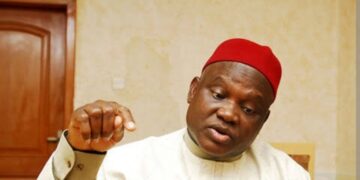
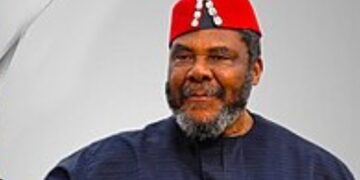
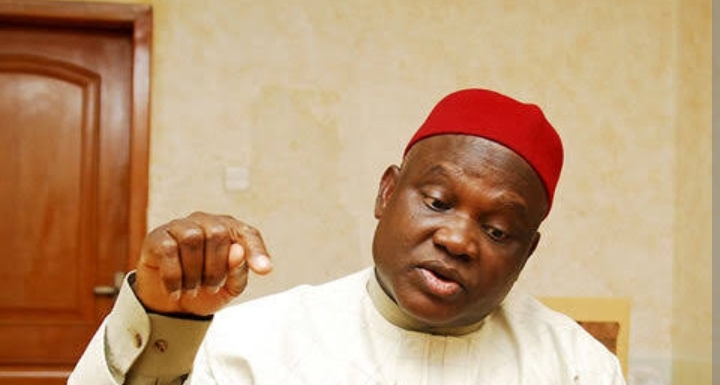
Chief Chekwas Okorie, National Chairman of the Igbo Agenda Dialogue (IAD), has urged President Bola Ahmed Tinubu to release detained Indigenous People of Biafra (IPOB) leader, Mazi Nnamdi Kanu, unconditionally, warning that failure to do so could have devastating political consequences for the President ahead of the 2027 general elections.
In a press release dated Wednesday, November 25, 2026, Okorie urged Tinubu to use the ongoing campaign season to announce Kanu’s release, alongside other Igbo people incarcerated over their involvement in the agitation for self-determination.
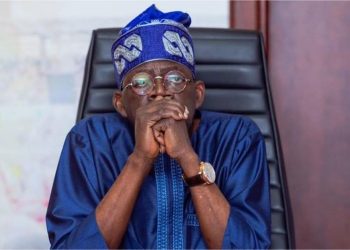
“It is with the utmost sense of patriotism and responsibility that I advise President Bola Ahmed Tinubu to seize the opportunity of this campaign season to announce the unconditional release of Mazi Nnamdi Kanu and other Igbo prisoners of conscience from prison,” the statement read.
“Any campaign promise he may make to the people of the Southeast geopolitical zone and by extension to all Igbo people in Nigeria and the diaspora without addressing the matter of Mazi Nnamdi Kanu as herein advised will be of no moment.”
Okorie maintained that the continued detention of Kanu had become a major concern for the Igbos, arguing that the IPOB leader had come to represent the perceived marginalisation of the ethnic group in Nigeria.
“Mazi Nnamdi Kanu symbolizes the disdain all Igbo related concerns in Nigeria are treated,” he wrote, adding that the President had the constitutional powers to intervene.
“The Nigerian Constitution empowers the president with special presidential dispensation to grant him and his associates freedom.”
Tracing the origins of the Biafra agitation, Okorie linked the movement to what he described as decades of political exclusion and discriminatory government policies against the people of the former Eastern Region following the Nigerian Civil War.
“It was in 2012 that the Indigenous People of Biafra, IPOB, led by Mazi Nnamdi Kanu, joined the agitation for a separate state of Biafra from the Nigerian Federation. In 1999, Chief Ralph Uwazurike led the formation of the Movement for the Actualization of the Sovereign State of Biafra, MASSOB, which began the agitation for exit from the Nigerian Federation,” the statement read.
He traced the grievances behind the separatist movements to the aftermath of the 1970 civil war, arguing that successive administrations had continued to alienate the Igbo despite the declaration of “no victor, no vanquished” at the end of the conflict.
“The various obnoxious policies of subsequent Nigerian governments since 1970 when the fratricidal Biafra/Nigeria war ended on a note of no-victor-no-vanquished targeted at the people of the former Eastern Region who constituted the defunct Republic of Biafra, created the impression that the Nigerian Military and Political leaders deliberately continued the war by other means till this day.
“It was this feeling of alienation and exclusion of mostly the Igbo people from the commanding heights of Nigerian politics and bureaucracy that triggered the agitations.”
Okorie also referenced separatist movements in other parts of the country, including the Yoruba struggle for self-determination following the annulment of the June 12, 1993 presidential election won by the late Chief MKO Abiola.
“In 1993, two factions of the Odua Peoples Congress, OPC, led by Dr Frederick Fasehun and Chief Gani Adams led the agitation for a separate Yoruba Republic following the annulment of the 1993 presidential election won by Chief MKO Abiola.
“In 2020, Prof Banji Akintoye led a more sophisticated, aggressive, and intellectually driven movement to actualize Oduduwa Republic for the Yoruba Nation.”
He also recalled the Niger Delta’s agitation for a separate republic, which he said was formally declared on February 23, 1966, while identifying Boko Haram and the Islamic State West Africa Province (ISWAP) as champions of agitation for a separate caliphate.
“The agitation for the Niger Delta Republic was formally declared on February 23, 1966. That agitation has remained on the table till this day.
“The agitation for a Caliphate Republic is being championed by Boko Haram, ISWAP, etc, with incalculable damage, subversion, and destabilization of the Nigerian Federation.”
However, Okorie accused successive APC administrations of adopting a different approach to the Biafra agitation, alleging that the government had relied predominantly on military operations against the Igbo separatist movement while employing non-military measures to address similar agitations elsewhere.
“Whereas Nigerian governments have adopted mostly non-kinetic approaches to contain and assuage these other agitations, the APC governments have used only kinetic engagements in dealing with the Igbo agitators.
“Igbo land has become an occupied territory by Nigerian security agencies for nearly a decade, all in the name of quelling the agitation for a state of Biafra. Several young and promising Igbo sons and daughters have been massacred in genocidal proportion.”
On Kanu’s prolonged legal battle, the IAD chairman recalled that the IPOB leader had been involved in court proceedings since 2015 over his campaign for an independent Biafra, insisting that neither Kanu nor the organisation had taken up arms against Nigeria.
“Between 2015 and now Mazi Nnamdi Kanu, the leader of IPOB has been dragged through various Nigerian courts for leading the struggle for a state of Biafra. Neither Mazi Nnamdi Kanu nor IPOB has taken up arms or waged war against the Nigerian state.”
He described Kanu’s return to Nigeria from Kenya in June 2021 as an extraordinary rendition, recounting the major developments in the case, including the Court of Appeal’s decision to discharge and acquit him in October 2022 and the Supreme Court’s subsequent reversal of that judgment in December 2023.
“On June 19 2021, Mazi Nnamdi Kanu was abducted from Kenya in an extraordinary rendition to continue his trial in Nigeria.
“On October 13, 2022, the Court of Appeal discharged and acquitted him. On the 15th of December 2023, the Supreme Court overturned the judgment of the Appeal Court and ordered the return of the case to the High Court.”
The statement further recalled that the Federal High Court in Abuja sentenced Kanu to life imprisonment on November 20, 2025, after which he was transferred to a correctional facility in Sokoto State.
Beyond Kanu’s case, Okorie raised concerns over the detention of other Igbo people for their involvement in self-determination campaigns, contrasting their situation with the rehabilitation and reintegration of other convicted Nigerians.
“There are several other Igbo sons and daughters who are languishing in various Nigerian prisons for no other reason than agitating for self-determination or exit from Nigeria.
“On the other hand, other Nigerians who have committed worse offenses are being rehabilitated and trained in some skills and released back into society to start a new life.”
The IAD chairman also recalled repeated appeals by Igbo leaders to former President Muhammadu Buhari and Tinubu for Kanu’s release, saying the interventions had yielded no result.
“Several Igbo leaders have variously appealed to both the late President Muhammadu Buhari and President Bola Ahmed Tinubu to release Mazi Nnamdi Kanu. These appeals fell on deaf ears.”
He specifically cited the President-General of Ohanaeze Ndigbo Worldwide, Senator John Azuta-Mbata, who had publicly appealed to Tinubu on two major occasions to release the IPOB leader.
“The President General spoke the minds of the Igbo in Nigeria and in the diaspora when he stated that it is the Igbo Nation that is in prison for as long as Mazi Nnamdi Kanu is in prison.
“This profound statement emphatically mirrored the sensitivity of our people in the matter of Mazi Nnamdi Kanu and other Igbo prisoners of conscience.”
Concluding his appeal, Okorie warned that Tinubu’s failure to act could carry serious political consequences in the next general election.
“The political consequence of ignoring this advice given freely and in good faith will be devastating,” he warned.
He expressed hope that Kanu and other detained associates would regain their freedom before the end of the year.
“Igbo people look forward to welcoming Mazi Nnamdi Kanu and his associates in incarceration home on or before December 31st, 2026.”