








By Daniel Nduka Okonkwo
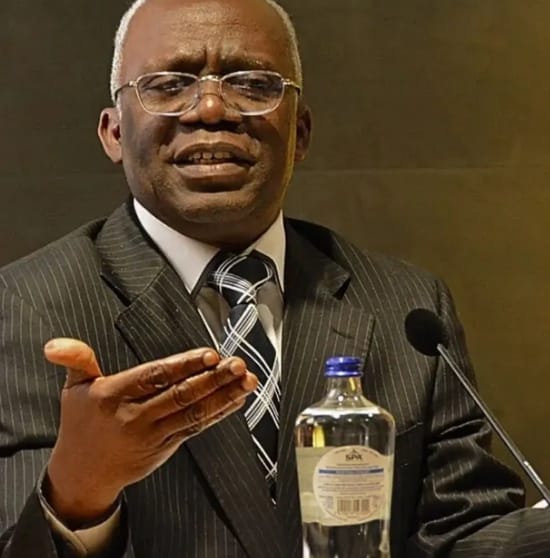
Human rights lawyer Femi Falana (SAN), in a signed public statement sent to Profiles International Human Rights Advocate, has called on the Nigerian media to use the ongoing political campaigns to demand clear and measurable commitments from every registered political party and candidate on how they intend to guarantee free and compulsory basic education for every Nigerian child. He has also urged political parties to include school feeding in their education programmes and commit to removing school-age children from the streets and ensuring their enrolment in schools across the 36 states and the Federal Capital Territory.
His intervention comes as preparations for the 2027 general elections gather momentum. Education remains a major electoral issue, with successive governments making commitments to improve access to schooling, while millions of Nigerian children continue to face barriers to basic education. The central question is whether political parties and candidates are prepared to move beyond campaign promises and present clear, measurable plans for delivering on this constitutional responsibility.
His intervention comes as preparations for the 2027 general elections gather momentum. Education remains a major electoral issue, with successive governments making commitments to improve access to schooling, while millions of Nigerian children continue to face barriers to basic education. The central question is whether political parties and candidates are prepared to move beyond campaign promises and present clear, measurable plans for delivering on this constitutional responsibility.
Falana anchors his argument in law. He points to section 18 of the 1999 Constitution, section 2(1) of the Compulsory, Free Universal Basic Education Act 2004, which obliges every government to provide free basic education, and section 15 of the Child’s Rights Act, which provides for every child’s right to free, compulsory, and universal basic education. The constitutional provision establishes education as a government responsibility, while the UBE Act provides a specific statutory framework for its delivery. Under the programme, federal funding includes a block grant of at least 2 percent of the Consolidated Revenue Fund, with states required to provide counterpart funding. Tuition, books, and other prescribed services in public primary and junior secondary schools are intended to be free, and the law provides sanctions against the collection of prohibited fees.
He also points to judicial decisions affirming the right to education. The ECOWAS Court in SERAP v. Federal Republic of Nigeria and the Federal High Court in the LEDAP case both addressed the government’s obligations concerning children’s access to basic education. Falana himself sued the Federal Government and the 36 states in January 2024 over the same issue. His central criticism is that governments have continued to disregard their statutory responsibilities and judicial pronouncements.
The first problem candidates must confront is the actual scale of the crisis. Available estimates differ considerably. UNICEF has reported more than 10.2 million out-of-school children, while UNESCO’s Global Education Monitoring Report has put the figure at approximately 18.2 million. The Federal Government has also cited an estimate of about 15 million, while a UNICEF education specialist has referred to 20 million. These figures must be understood in the context of their respective reference periods and methodologies. A Guardian review also found significant gaps in publicly available data from UBEC and other relevant education agencies. A country that cannot establish a reliable number of children outside school will struggle to measure the success of any promise to bring them back.
The crisis does not end with children who never enrol. Many children who attend school still fail to acquire basic literacy skills. UNICEF has reported that only one in four Nigerian children can read at the age of 14. Nigeria’s education crisis, therefore, has two dimensions: millions of children remain outside the classroom, while many of those enrolled progress through the school system without acquiring the basic reading skills expected of their age.
The funding question is where Falana’s challenge becomes particularly difficult for political leaders to avoid. The Universal Basic Education Commission disclosed that, as of August 2026, approximately ₦267 billion in released intervention funds remained unutilised, while more than ₦65 billion in counterpart funding had not been accessed by states. The Executive Secretary, Aisha Garba, expressed concern over the situation, describing the money as funds meant for children that were sitting idle.
This is not a new problem. A ThisDay editorial of October 29, 2026, recalled that the commission had reported unaccessed funds for almost two decades, including ₦50 billion in 2010, ₦80.9 billion in 2015, and ₦263 billion as of December 2024. It reported that about nine states had yet to fully access available funds because they failed to provide the required counterpart contributions, naming Abia, Ogun, and Imo among them. The recurring pattern raises serious questions about political commitment, budgetary priorities, and the ability of state governments to meet their obligations to children.
To be fair, some states have accessed their matching grants. UBEC says states have drawn down more than ₦177 billion in matching funds. Federal officials have also reported that states accessed more than ₦106 billion between January 2025 and January 2026. Garba has reminded governors that federal intervention alone cannot meet the educational needs of an estimated 40 million school-age children and that state governments must increase their own funding. The federal commitment also appears inadequate when measured against the scale of the crisis. The 2026 budget earmarked ₦35 billion for programmes specifically targeting out-of-school children, while the Federal Government has estimated that reintegrating approximately 15 million children would cost about $345 million annually.
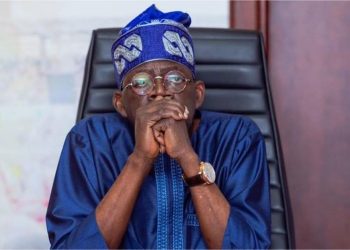
School feeding provides another example of the gap between government announcements and implementation. Falana says the programme was stopped without justification. However, the public record provides some explanation. President Bola Tinubu suspended programmes operated by the National Social Investment Programme Agency in January 2024, including the Home-Grown School Feeding Programme, following the suspension of the agency’s chief executive over alleged financial malfeasance. The disruption left millions of pupils without the expected meals. A relaunch was subsequently announced for May 2025. Yet an August 2026 working paper from the Nigeria Strategy Support Program reported that implementation of the restructured programme had so far been limited to pilot activities in Lagos and Kano. Whatever the circumstances surrounding the suspension, the central question remains: why have millions of children not regained access to a programme designed to support their education and welfare?
This is why the media challenge matters. A candidate who declares education a priority has made a promise that cannot easily be measured. A candidate who commits to specific enrolment targets, implementation deadlines, and budgetary allocations gives voters something against which to assess performance after the election. The questions are straightforward. Will your government provide its counterpart funding every year and publish records of expenditure? How many out-of-school children are in your state, and by what date will they be enrolled? Will they restore school feeding on a sustainable scale, and how much will it cost? How will you enforce compulsory education laws while ensuring that poverty, inadequate school facilities, and other barriers do not keep children out of classrooms?
Journalists should put these questions to candidates at every campaign rally, town hall meeting, and television interview. They should demand specific answers, challenge vague promises, and return to the same questions when elected officials fail to deliver. Candidates must disclose their education budgets, identify their funding sources, establish measurable enrolment targets, and explain how they intend to ensure that children who enter school actually learn.
Femi Falana has placed an important responsibility before the Nigerian media ahead of the 2027 elections. Political parties and candidates should not be allowed to campaign on promises of development while avoiding accountability for the millions of Nigerian children denied meaningful access to education. Every candidate seeking public office must explain, in clear and measurable terms, how their government will ensure that every Nigerian child can enter a classroom, remain in school, and acquire the education needed to build a future. Education must become an electoral commitment that voters can measure, not another campaign promise abandoned after elections.
Daniel Nduka Okonkwo is an investigative journalist, human rights advocate, and policy analyst based in Nigeria. He is the founder and publisher of Profiles International Human Rights Advocate (PIHRA), a platform documenting the courage of human rights defenders and examining issues of governance, accountability, security, and fundamental rights.
His reporting on Nigerian governance, security-sector accountability, public finance, and human rights has appeared in Sahara Reporters, Vanguard, Daily Trust, African Defence Forum, Opinion Nigeria, and Daily Intel.
Read more of his work on the PIHRA website:
https://www.profilesinternationalhumanrightsadvocate.com.ng/
For tips, feedback, or collaboration, contact him at dan.okonkwo.73@gmail.com.