































The deniability by Nigeria’s two major political parties following the Canadian court ruling last year, coupled with fresh allegations that a known terrorist is a card-carrying member of the All Progressives Congress (APC), sets a dangerous and troubling precedent.
Nigeria, like many democracies, continues to grapple with the delicate balance between national security and civil liberties. The state often attempts to depoliticise violence by framing it strictly as criminality, while simultaneously managing the fear such violence generates among the populace. If it is arguable that the Canadian court erred in labelling Nigeria’s major political parties as having terrorist affiliations, how then, in good conscience, can a terrorist have access to a political party membership card? And if the card was forged, why would a terrorist, or those acting on his behalf, seek to forge such a document in the first place? These are critical questions Nigerian intelligence agencies should be directing at the party involved.
The intersection of politics and violence is not unique to Nigeria. In a landmark judgment delivered on June 17, 2025, the Canadian Federal Court upheld a decision by Canada’s Immigration Appeal Division (IAD) denying asylum to Douglas Egharevba, a former member of both the Peoples Democratic Party (PDP) and the APC. The court ruled that mere affiliation with political parties linked to violence and subversion met the threshold of inadmissibility under Canada’s Immigration and Refugee Protection Act (IRPA).
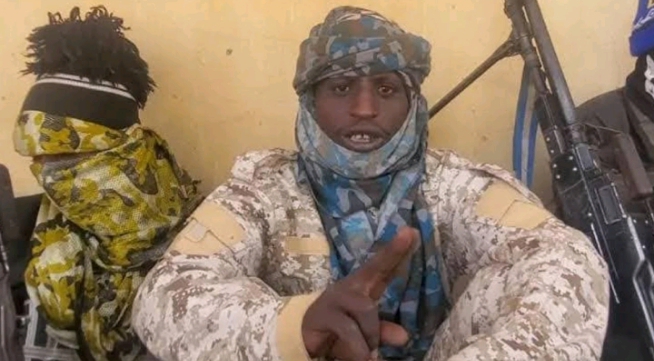
Against this backdrop, the Zamfara State chapter of the APC dismissed as fraudulent and malicious a party membership card allegedly bearing the name and photograph of notorious bandit leader Bello Turji. The party described the circulating card as a deliberate attempt to tarnish its image and undermine the credibility of its ongoing e-registration exercise in the state.
In a statement issued on Monday and made available to journalists, the APC’s Zamfara State spokesperson, Yusuf Idris, disclosed that the card circulating in the public space was forged by mischievous elements intent on sabotaging the party’s registration process.
According to Idris, the forgery contains glaring inconsistencies easily detectable even by a casual observer. He noted that the membership number on the card begins with the code “26,” which is officially designated for Niger State, not Zamfara. Zamfara APC membership numbers, he explained, begin with the code “36.”
“Even to the man on the street, the forgery is easily detectable, including the bold ‘26’ on the date, purportedly referring to January 26. No APC registration number in Zamfara begins with ‘26,’” Idris stated.
He further explained that no individual can be duly registered as an APC member without a valid National Identification Number (NIN), a requirement enforced nationwide. Bello Turji, he noted, does not possess a NIN, making the purported registration impossible.
“Before anyone is enrolled by the National Identity Management Commission (NIMC), the individual must complete a form containing full personal details before biometric capture. How then could NIMC capture someone wearing a military uniform and carrying a gun on his shoulders? Such features are unacceptable and clearly expose the ignorance of the forgers,” Idris added.
The APC spokesperson also revealed that records from Kware Ward, where the registration was allegedly carried out, show no identification number beginning with “26” on the day in question. He described the attempt as crude, desperate, and ultimately futile.
According to preliminary investigations, the forged card has been linked to Babangida Aliyu Shinkafi (Waziri), an associate of Sani Abdullahi Shinkafi, who was recently suspended from participating in the e-registration exercise over alleged dubious activities.
“The bottom line is that the APC e-registration coordination team in Zamfara, and indeed the entire state chapter of the party, completely disassociates itself from the fake membership card bearing registration number ID APC 261113000102,” Idris said.
Beyond the forgery scandal, the incident has reignited broader concerns about the politicisation of terrorism and banditry in Nigeria, particularly in northern states where violent non-state actors continue to challenge government authority.
Negotiating with terrorists and armed bandits remains a deeply contentious issue, one that many governments deliberately avoid due to its far-reaching implications for national security, the credibility of law enforcement, and ethical governance. While some states engage in negotiations during hostage situations, critics warn that such engagements often embolden violent actors, legitimise their actions, and undermine the rule of law.
Terrorism, experts note, is not merely an act of violence but a strategic political tool aimed at destabilising the state, coercing governments, and influencing policy outcomes. Modern terrorism has evolved from large, organised groups to include lone-offender attacks, frequently facilitated by online radicalisation and social media platforms. Its underlying drivers often include political instability, economic inequality, social injustice, and ethnic or religious tensions.
The Canadian judgment cited evidence of ballot stuffing, voter intimidation, and politically motivated killings linked to the PDP during the 2003 state elections and the 2004 local government polls, reinforcing the principle that political violence carries long-term legal and moral consequences beyond national borders.
The National Security Adviser (NSA) and relevant intelligence agencies should conduct a thorough investigation into the circulation of the forged APC membership card and identify those responsible.
Terrorists should never be negotiated with, legitimised, or weaponised for political propaganda, warning that such practices risk deepening insecurity and eroding public trust in democratic institutions.
As Nigeria continues its struggle against terrorism, the incidents such as this emphasize the urgent need for intelligence-led policing, political accountability, and a firm national consensus that violence must never be normalised, whether through negotiation, propaganda, or political manipulation.
Daniel Nduka Okonkwo is a seasoned writer, human rights advocate, and public affairs analyst renowned for his incisive commentary on governance, justice, and social equity. Through Profiles International Human Rights Advocate, he champions accountability, transparency, and institutional reform in Nigeria and beyond. With over 1,000 published articles indexed on Google, his work has appeared on Sahara Reporters and other leading international media platforms.
He is also an accomplished transcriptionist, petition writer, ghostwriter, and freelance journalist, widely recognised for his precision, persuasive communication, and unwavering commitment to human rights.
📧 Contact: dan.okonkwo.73@gmail.com