












By Daniel Nduka Okonkwo
For those of us who report these events, there is also an unavoidable responsibility. Journalism cannot ignore serious allegations merely because they involve powerful institutions, nor can it abandon the discipline of fairness because a story is politically charged. The obligation is to continue asking difficult questions, to seek responses from every relevant authority, and to allow verified facts, not fear, speculation, or advocacy, to guide the public record.
Today, the collision between state power and civic resistance has reached a perilous point. Allegations of extrajudicial killings, arbitrary detentions, and the silencing of dissent are no longer confined to activist circles. They are documented by human rights organisations and echoed by international watchdogs. The National Human Rights Commission itself records hundreds of thousands of complaints annually, underlining the scale of abuses attributed to state actors. The trial of Omoyele Sowore has become emblematic of a broader struggle, a test of whether Nigeria’s institutions can withstand political pressure and deliver justice, or whether they will bend to efforts aimed at criminalising dissent. Journalism cannot avert its gaze from this moment. To do so would be to abdicate its responsibility to truth, fairness, and the public record.
The stakes extend beyond one man’s freedom. Sowore’s ordeal, marked by contested bail conditions and the arrest of a journalist covering his case, illustrates how fragile Nigeria’s democratic space has become. Amnesty International’s designation of him as a prisoner of conscience is not merely symbolic. It reflects concern that civic rights are under sustained pressure. When peaceful protest is criminalised, when journalists face professional risk for their coverage, and when public confidence in the courts is strained, the legitimacy of governance itself is called into question. History suggests that repression tends to breed resistance rather than resolve it, and Nigeria now faces a choice about how firmly it recommits to protecting fundamental freedoms.
Reporting on an ongoing criminal trial demands restraint, particularly where allegations touch on the integrity of Nigeria’s security institutions and the judiciary. It also requires the discipline not to look away when matters of significant public interest arise. The latest public statement by Omoyele Sowore presents that challenge.
The human rights activist and publisher of Sahara Reporters has raised allegations of considerable gravity, carrying implications not only for the parties involved but also for public confidence in the administration of justice. For that reason, they warrant careful reporting rather than sensational repetition.
According to Sowore, he was confronted by individuals he believes were linked to the Department of State Services at the Federal High Court last week. He has publicly attributed responsibility to the agency’s leadership and says the agency later described the same incident as being under investigation.
Sowore also revisited the dispute over his release after spending nine days in detention at the Kuje Correctional Centre. According to his account, the prosecuting counsel questioned whether his bail conditions had been fully perfected. Sowore maintains that the court’s Bail Unit confirmed his compliance with the conditions ordered by the court. The disagreement forms part of his broader contention that his case has been subjected to unusually rigorous treatment.
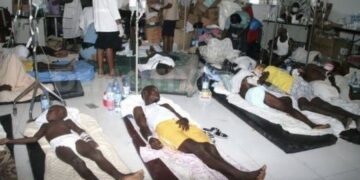
Beyond the legal arguments surrounding his detention, one detail from Omoyele Sowore’s account stands out with profound human significance: his revelation that he was confined in an overcrowded section of Kuje Correctional Centre alongside 37 inmates receiving treatment for tuberculosis. If accurate, the account raises serious concerns not only about the conditions of detention but also about the health, dignity, and welfare of everyone held in such facilities. Regardless of political beliefs or legal disputes, no person should be exposed to conditions that could endanger their health while awaiting the due process of law. A justice system is measured not only by its courts but also by how it treats those in its custody, reminding us that humanity must never become collateral damage in the pursuit of justice.
The arrest of a journalist who had been covering Sowore’s case has further intensified concern among press freedom advocates, and civil society organisations have called for greater transparency
In his public remarks, Sowore maintained that he is prepared for whatever outcome the trial may produce. He argued that governments that narrow democratic space, place pressure on journalists, and prosecute outspoken critics risk deepening public frustration rather than strengthening public confidence.
Sowore has been arrested hundreds of times over the course of more than three decades of activism, with claims that he has been detained in formal correctional facilities dozens of times since the early 1990s. Those figures have become part of the public narrative surrounding his long-running confrontations with successive Nigerian governments.
His encounters with security agencies stretch back to his years as a student union activist at the University of Lagos during military rule. Human rights advocates have long maintained that he endured repeated arrests, periods of solitary confinement, and other forms of detention while leading pro-democracy demonstrations. His experience reflects the risks faced by activists who challenge governments across different political administrations.
Among his most widely documented arrests was his August 2019 detention by the Department of State Services following the #RevolutionNow protests. He remained in DSS custody for more than four months despite several court orders granting him bail, a detention that attracted widespread condemnation from local and international human rights organisations. Amnesty International declared him a prisoner of conscience, while numerous press freedom and human rights groups argued that his prolonged detention undermined respect for the rule of law.
Sowore spent approximately 143 days in solitary confinement during that detention, an episode cited by international human rights advocates as raising serious concerns about compliance with Nigeria’s constitutional guarantees and international human rights obligations.
Despite repeated arrests, criminal prosecutions, prolonged detention, allegations of intimidation, and restrictions that have at various times affected his personal and family life, Sowore has continued his civic and political activities. Whether viewed as an uncompromising democracy activist or as a controversial political figure, few would dispute that he has remained one of Nigeria’s most persistent and resilient critics of those in power. That consistency, maintained across successive governments and changing political administrations, has become a defining feature of his public life and forms an important part of his activism.
Recent court proceedings lend independent weight to parts of Sowore’s account. Court records show that his bail was revoked on June 16 after he failed to appear for trial, leading to his remand at Kuje Correctional Centre and a bench warrant for his arrest. The Federal High Court, presided over by Justice Mohammed Umar, later set aside that revocation and the bench warrant, and on June 30 granted him fresh bail on stricter terms, requiring a traditional ruler from his community in Ondo State as one surety and a Federal Capital Territory property owner as the second, with his international passport surrendered to the court. At the resumed hearing on July 6, the prosecution, led by Akinlolu Kehinde, SAN, again asked the court to remand Sowore, arguing he had not perfected those bail conditions or notified the prosecution of any difficulty in meeting them. The defence responded that delays in retrieving Sowore’s passport from the United States Embassy in Lagos, which was closed for the American Independence Day holiday, were responsible, and gave assurances that the conditions would be met. The same day, Sowore opened his formal defence, calling activist and lawyer Deji Adeyanju as his first witness, who tendered video evidence of remarks reportedly made by President Bola Tinubu on citizens’ right to criticise public officials. Justice Umar adjourned the matter to July 13 for the continuation of the trial.
Whatever the eventual judgment of the court, this case has grown beyond the legal questions contained in the charge sheet. It has become a matter closely watched by lawyers, journalists, civil society organisations, and international human rights observers, and its outcome will inevitably inform broader discussions about freedom of expression, due process, and the space available for dissent in Nigeria. Whether one agrees with Sowore’s politics or not, his long history of arrests, detention, and continued activism has become inseparable from the national conversation about civil liberties. That history, together with the questions now before the court, ensures that this trial will be remembered not merely as a criminal proceeding, but as another defining chapter in Nigeria’s continuing struggle over the boundaries of democratic freedom.
Daniel Nduka Okonkwo is an investigative journalist, human rights advocate, and policy analyst based in Abuja, Nigeria. He is the publisher of Profiles International Human Rights Advocate, a platform focused on accountability journalism, governance reporting, and the documentation of human rights issues across Africa. His work examines the intersection of political power, institutional accountability, systemic failure, and the human impact of corruption, with particular focus on Nigeria and the wider African continent.
Okonkwo’s reporting and analysis have been published in Sahara Reporters, African Defence Forum, Daily Trust, Vanguard, Daily Intel, Opinion Nigeria, African Angle, Local Newsbreak, and other international media outlets. His work is driven by a commitment to transparency, democratic governance, and justice. He also collaborates with Daniels Entertainment on human rights initiatives, extending his advocacy beyond traditional journalism into broader public engagement.
He is based in Abuja, Nigeria, and can be reached at dan.okonkwo.73@gmail.com.