
















By Daniel Nduka Okonkwo
On March 31, 2015, Goodluck Jonathan became the first sitting president in Nigeria’s Fourth Republic to concede defeat in a presidential election, telephoning Muhammadu Buhari before the Independent National Electoral Commission (INEC) had completed announcing the results. INEC’s final tally gave Buhari 15,424,921 votes (53.96 percent) against Jonathan’s 12,853,162 (44.96 percent), a margin of about 2.57 million. Sixteen years of the People’s Democratic Party (PDP) rule ended.
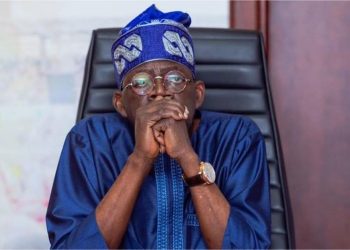
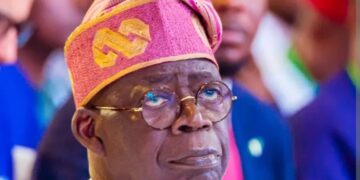
Nearly twelve years later, President Bola Ahmed Tinubu faces his own electoral test. The presidential election, initially scheduled for February 20, 2027, was moved to January 16 after a new Electoral Act was enacted. INEC’s final list contains 18 candidates, including Tinubu of the All Progressives Congress (APC), Atiku Abubakar of the African Democratic Congress (ADC), and Peter Obi of the Nigeria Democratic Congress (NDC).
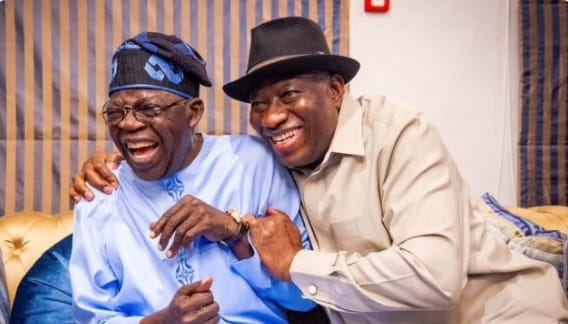
The irony is difficult to ignore. Tinubu helped build the coalition that removed Jonathan. Now he must defend his presidency against opposition forces attempting to assemble a similar alliance.
Jonathan’s defeat was not caused by one failure. It reflected the convergence of insecurity, economic dissatisfaction, corruption allegations, internal party divisions, and an opposition united behind a common candidate.
Boko Haram’s insurgency and the April 2014 abduction of 276 Chibok schoolgirls became symbols of a government struggling to protect its citizens. Then Central Bank Governor Sanusi Lamido Sanusi alleged that approximately $20 billion in oil revenue had not been properly accounted for, a claim the government disputed. Former President Olusegun Obasanjo also became a vocal critic of Jonathan. Five serving PDP governors defected to the APC, while Speaker Aminu Tambuwal followed in October 2014.
The electoral geography exposed the scale of the shift. A London School of Economics analysis found that the North-West supplied 46 percent of Buhari’s votes. In the South-West, Buhari’s vote rose from about 320,000 in 2011 to 2.4 million in 2015. In Kano, he secured nearly 1.9 million votes against Jonathan’s 215,800. Public anger did not remove Jonathan by itself. It was amplified by a united opposition and defections from within his political establishment.
That combination is not yet evident in 2027. Opposition leaders pledged at an April summit in Ibadan to field one presidential candidate. The G100 summit in Abuja on August 31 exposed continuing divisions. Atiku and Obi were absent, while an ADC faction led by Nafiu Bala Gombe publicly disputed Atiku’s claim to the party’s candidacy. On November 16, the Coalition for Democracy announced a November 23 summit to sign cooperation documents.
Makinde has said he is willing to work with Obi, Atiku, and other opposition figures, but not Tinubu. People’s Redemption Party (PRP) National Chairman Hakeem Baba-Ahmed has predicted that Tinubu would lose if the election were free and fair.
The challenge is converting separate political structures into one effective campaign. Atiku brings national political networks and experience; Obi retains a substantial support base from 2023; Makinde commands the political machinery of Oyo State. Their cooperation requires agreement on candidate selection, regional representation, financing, and whether supporters will accept a shared ticket.
Tinubu won in 2023 with 8,794,726 votes, about 37 percent of the valid votes. The Economist has argued that incumbency, ruling-party machinery, and a divided opposition could allow him to win again despite public dissatisfaction. Control Risks analyst Joachim MacEbong similarly observed that the anti-APC vote was not consolidated behind one ticket. The opposition’s fragmentation, therefore, remains a significant factor in the contest.
The economy offers competing narratives. The National Bureau of Statistics reported headline inflation of 14.06 percent in October 2026, down from 18.97 percent a year earlier. Yet food inflation stood at 19.13 percent, above 16.30 percent in October 2025, while monthly headline inflation rose to 0.43 percent. A September Central Bank survey found that 77.2 percent of households perceived inflation as high.
The World Bank reported growth of 4.2 percent in the first half of 2026. However, its April 2026 update projected that 63 percent of Nigerians, approximately 140 million people, would live below the national poverty line in 2025. Falling inflation means prices are rising more slowly, not that they are falling.
Public debt and crude-backed borrowing raise further questions. The Debt Management Office put total public debt at ₦166.79 trillion as of June 30, 2026. NNPC’s reported crude-backed facilities total $8.86 billion, with commitments of 272,500 barrels per day. These arrangements raise a fundamental fiscal question: how much future oil revenue will remain available to the Federation Account and public services?
Security remains one of the sharpest echoes of 2015. In two separate attacks on schools in Mussa and Lassa communities in Askira-Uba Local Government Area of Borno State, 78 schoolchildren were abducted on May 15 and June 29, 2026. The President’s October 1 Independence Day address did not refer to their plight. On November 21, Saturday, PUNCH reported that all 78 children remained in captivity, with their families still awaiting information about their whereabouts and rescue efforts. Four days later, during an APC rally in Maiduguri, Tinubu publicly pledged that his administration would do everything possible to secure their release. The promise was welcome, but the children were still awaiting freedom. Jonathan’s handling of the Chibok abduction became a lasting political liability. Tinubu now faces a similar test: whether his government can translate assurances into decisive action, bring the children home, and restore public confidence in its ability to protect schoolchildren.
The credibility of the electoral process is equally critical. Jonathan’s concession in 2015 helped secure a peaceful transfer of power, demonstrating the importance of an electoral system capable of commanding public confidence. Yet INEC’s own 2023 General Election Report raises questions about the conditions under which election officials operate. In its section on Lagos State, the report identified inadequate allowances for presiding and assistant presiding officers as a source of discouragement, warning that the situation created room for “temptation/inducement”. Although this observation was specific to Lagos and cannot be presented as a nationwide finding, it exposes a vulnerability that demands serious attention. Election officials are central to the credibility of the voting process; their welfare, training, logistical support, and operational independence must therefore be treated as essential safeguards, not administrative afterthoughts. As Nigeria approaches another consequential presidential election, the integrity of the process will depend not only on the promises of political actors but also on whether the electoral body can organise a transparent, credible, and verifiable contest.
The 2015 upset required a united opposition, a ruling party losing influential members, and an electoral process credible enough for the defeated incumbent to accept its outcome. In 2027, opposition unity remains unsettled, defections have favoured the incumbent, and confidence in the electoral umpire remains contested.
The odds, as The Economist and other analysts suggest, may favour the incumbent. The opposition may yet find its unity. But the gods do not vote. Nigerians do.
Daniel Nduka Okonkwo is an investigative journalist, human rights advocate, and policy analyst based in Nigeria. He is the founder and publisher of Profiles International Human Rights Advocate (PIHRA), a platform documenting the courage of human rights defenders and examining issues of governance, accountability, security, and fundamental rights.
His reporting on Nigerian governance, security-sector accountability, public finance, and human rights has appeared in Sahara Reporters, Vanguard, Daily Trust, African Defence Forum, Opinion Nigeria, and Daily Intel.
Read more of his work on the PIHRA website:
https://www.profilesinternationalhumanrightsadvocate.com.ng/
For tips, feedback, or collaboration, contact him at dan.okonkwo.73@gmail.com.