




























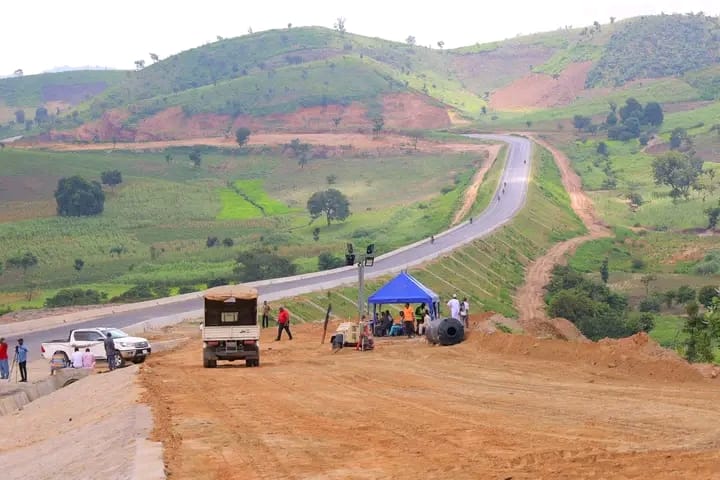
How purposeful leadership is reviving abandoned projects and extending development to FCT satellite communities
By Dr. Jumai Ahmadu
Some infrastructure projects are measured not only by their length or financial value, but by the years of hardship endured by the people waiting for their completion. The Apo–Karshi Road is one such project.
First awarded in 2010, the road remained uncompleted for approximately 16 years. For residents of Apo, Karshi and surrounding communities, the prolonged delay translated into difficult journeys, traffic congestion, increased transportation costs and lost economic opportunities. What should have been a strategic alternative route into Abuja gradually became a painful reminder of an unfulfilled government promise.
Today, however, the story is changing.
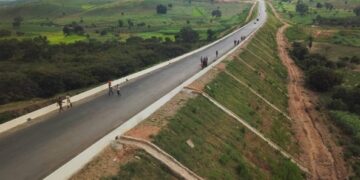
Through the determined intervention of the Minister of the Federal Capital Territory, Barr. Ezenwo Nyesom Wike, the once-stalled Apo–Karshi Road is finally approaching completion.
The road is expected to be handed over by the contractor in November and opened to residents by December 2026.
This is not merely the continuation of an inherited project. It is the result of purposeful leadership, political will and a deliberate decision to confront a long-standing challenge that previous administrations could not resolve.
A Project Rescued from Abandonment
Upon assuming office, the FCT Minister did not ignore the condition of the Apo–Karshi Road or hide behind the fact that the contract predated his administration. The stalled contract was reviewed, revoked and re-awarded, while closer supervision was introduced to ensure that work progressed according to an agreed timeline.
This is the hallmark of the Wike leadership style: identify the problem, take responsibility and pursue results.
During his inspection of the project on September 24, 2026, the Minister expressed satisfaction that the road, after years of delay, had finally reached an advanced stage of completion.
His words captured the importance of the moment: “I am so happy that we have been able to conquer the Apo–Karshi Road. You know the importance of that road. It was awarded in 2010. To the glory of God, we were there today, and we could see with our own eyes that, indeed, by November, they would have handed over that very important road.”
The use of the word “conquer” is particularly instructive. Completing a project that had remained unresolved for about 16 years required more than routine administration. It demanded courage, persistence, constant supervision and the willingness to take difficult decisions.
Wike did not merely inherit a problem; he accepted responsibility for solving it.
Infrastructure with Direct Human Impact
The significance of the Apo–Karshi Road goes far beyond asphalt and concrete. When completed, it will improve connectivity between the Abuja city centre and rapidly growing communities along the corridor. It will provide an alternative access route, reduce travel time and ease pressure on other major roads.
The project will also support commercial activities, improve access to markets, schools and healthcare facilities, increase the value of properties and create new economic opportunities for residents.
This is what people-centred infrastructure should achieve. It must improve daily life, promote inclusion and give citizens renewed confidence in government.
For residents who had almost given up hope, the emerging road is understandably an emotional sight. Their appreciation is not based on promises or projections but on the visible transformation taking place before them. Many are grateful to God for preserving their lives to witness this beautiful project finally come to life after nearly two decades of waiting.
Their gratitude also goes to President Bola Ahmed Tinubu for providing the enabling leadership under the Renewed Hope Agenda and to the FCT Minister for demonstrating the determination required to translate that vision into tangible results.
Extending Development Beyond the City Centre
The revival of the Apo–Karshi Road is part of a broader and deliberate strategy to extend development beyond Abuja’s city centre.
The ongoing Bwari–Kubwa Road project, which is also expected to be completed by the end of the year, reinforces this commitment. Despite delays caused by heavy rainfall, work has continued, with the contractor assuring the FCT Administration that the road will be delivered within the agreed period.
The enthusiastic reception given to the Minister by residents of Bwari during his inspection reflects the importance communities attach to visible and responsive leadership. People naturally identify with a government that listens to them, acknowledges their challenges and takes practical steps to address them.
For many years, residents of satellite towns watched major infrastructure projects concentrated largely within the city centre. Under the present FCT Administration, that narrative is being rewritten. Roads and other essential facilities are now reaching communities that had previously felt excluded from Abuja’s development.
Wike’s message is unmistakable: the FCT cannot develop in parts. The prosperity and beauty of the city centre must be reflected in the satellite towns and Area Councils where a significant proportion of the territory’s population lives.
Leadership Through Presence and Accountability
One of the defining features of Wike’s administration is his hands-on approach to governance. He does not rely solely on reports prepared in offices. He visits project sites, engages contractors, assesses progress, demands explanations and insists on delivery timelines.
Such inspections are not ceremonial exercises. They strengthen accountability, identify obstacles and send a clear message that delays and excuses will not be accepted where public resources and the welfare of residents are involved.
This approach has injected a renewed sense of urgency into project execution across the FCT. It has also demonstrated that leadership becomes more effective when those entrusted with authority remain close to the people and the projects intended to improve their lives.
The progress on the Apo–Karshi and Bwari–Kubwa roads is therefore further evidence of a government committed to results rather than rhetoric.
A Legacy of Promises Fulfilled
When the Apo–Karshi Road is commissioned, it will stand as more than another completed road. It will represent the triumph of determination over delay, action over excuses and responsible leadership over administrative indifference.
It will also remind residents that no project is beyond completion when there is sufficient political will.
The Wike-led FCT Administration is gradually restoring public confidence by completing inherited projects, initiating new ones and ensuring that infrastructure development reaches both urban and satellite communities. The scale, pace and geographical spread of the transformation are redefining expectations of what an FCT Administration can accomplish.
After 16 long years, the people of Apo, Karshi and neighbouring communities can finally see the end of their wait. A road once associated with abandonment is becoming a corridor of mobility, commerce and opportunity.
This is the essence of the Renewed Hope Agenda in the FCT: promises translated into projects, projects translated into improved living conditions, and leadership measured by visible results.
Indeed, Barrister Ezenwo Nyesom Wike is not merely building roads; he is reconnecting communities, reviving hope and demonstrating that with courage, commitment and purposeful leadership, government can truly work for the people.
Dr. Jumai Ahmadu is the Director, Reform Coordination and Service Improvement Department, FCTA