



























By Daniel Nduka Okonkwo
Nigeria’s economic reforms have produced figures running into trillions of naira, but behind those figures is a more basic question. When billions are allocated to cushion poor and vulnerable Nigerians, can the government produce a complete and independently verifiable record showing who received the money?
That question has become harder to ignore following findings in the Auditor General for the Federation’s 2024 Annual Report on Non-Compliance and Internal Control Weaknesses. The report examined transactions at the National Cash Transfer Office, NCTO, for 2023 and raised questions over electronic transfers of ₦33.751 billion made to 3,295,207 households and beneficiaries across 35 states.
According to the audit finding, the payment vouchers did not contain full beneficiary details, and the REMITA statement needed to reconcile the beneficiaries actually paid against those listed on the National Social Register and National Beneficiary Register was not presented to the auditors. The report said attempts to obtain that transaction record were obstructed and denied by accounts personnel at the National Cash Transfer Office, a specific finding that goes beyond a general complaint about missing paperwork.
That distinction matters. The audit finding is not, by itself, proof that ₦33.751 billion was stolen, diverted, or paid to fictitious beneficiaries. It is a financial accountability and verification problem. The auditors said the available records were insufficient to establish, independently, that the money reached the intended beneficiaries.
On a simple division of ₦33.751 billion by the 3,295,207 households and beneficiaries cited in the audit, the average works out to approximately ₦10,242 per listed recipient. That is only an arithmetic average, not evidence that every household received the same amount, since actual payments may have varied by tranche or programme arrangement.
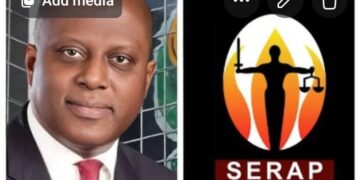
The wider issue is the ₦78.8 billion figure raised by the Socio-Economic Rights and Accountability Project, SERAP. In a September 5, 2026, letter, SERAP asked President Bola Tinubu to direct the relevant authorities to account for more than ₦78.8 billion in spending it described as diverted, unaccounted for, questionable, or irregular, based on findings contained in the Auditor General’s report.
SERAP’s calculation includes about ₦76.24 billion relating to NCTO and about ₦2.55 billion relating to the National Social Safety Nets Coordinating Office, NASSCO. Among the NCTO items it cited were the ₦33.751 billion in cash transfers, ₦36.744 billion paid without prepayment audit, ₦4.616 billion in unsupported expenditures, ₦350.182 million for enrolment of unbanked beneficiaries, ₦89.511 million in store purchases, ₦17.422 million in diesel advances, ₦280.42 million in advances to payment service providers made without the required guarantees, and ₦393.71 million in unutilised funds transferred to nine states whose return to the Treasury could not be confirmed.
SERAP also cited NASSCO findings involving ₦2.24 billion paid through 158 vouchers without prepayment audit, ₦44.55 million for laptops reportedly not delivered or entered in the store ledger, ₦19.76 million for advertisements without evidence of publication, and ₦141.01 million paid for software without the required clearance, alongside other unsupported expenditures and procurement-related findings.
The ₦78.8 billion figure should be described accurately. It is an aggregation by SERAP of various audit findings requiring explanation or further accountability. It should not be presented as ₦78.8 billion that the Auditor General has conclusively established was stolen. An audit query is a finding requiring explanation and resolution. A criminal offence requires evidence capable of establishing the elements of that offence.
The significance of the REMITA record has been understated in some of the public debate. It is not simply another piece of paperwork. It is the transaction-level evidence that lets an auditor reconcile a bulk payment against individual beneficiaries, and its absence is a different complaint from officials merely failing to publish a beneficiary list online. Section 85 of the 1999 Constitution gives the Auditor General access to the books, records, and documents relating to public accounts for federal audits, which is what makes the failure to produce that statement a question of institutional accountability rather than administrative inconvenience.
The NCTO has firmly disputed the interpretation that the audit query amounts to evidence of fraud. In a statement, the office described the interpretation of the audit observations as materially incomplete, insisting that the funds were transferred through the established payment system to beneficiaries captured in the National Beneficiary Register. It also disputed the allegation that its officials obstructed auditors from accessing REMITA payment records, saying documentary evidence, including emails showing the transmission of beneficiary data and payment information, was available for independent verification.
NCTO’s own words on the broader point are worth quoting directly. “An audit query or observation is not, by itself, a final determination that public funds were stolen, diverted, misappropriated, or lost,” the office said, adding that audit observations ordinarily require management responses, examination of supporting records, and reconciliation before definitive conclusions can be reached. On the separate ₦4.616 billion figure specifically, NCTO said the audit observation aggregated 101 transactions into that sum without providing the supporting detail needed to assess each one individually.
That response deserves to be placed clearly on the record, and it sharpens rather than eliminates the central question. If the relevant beneficiary lists, payment records, and transaction information exist, and NCTO says they do, can they be reconciled in a manner that independently establishes who received the ₦33.751 billion, when the payments were made, how much was received, and whether the recipients correspond with the authorised registers? NCTO’s claim of email evidence and the Auditor General’s claim of obstruction are not both true in the same sense, and only production of the underlying documents can settle which account holds up.
Government officials have separately argued that many beneficiaries live in remote communities without smartphones or social media access, which may explain why the public cannot locate them online. That does not answer the audit question. A beneficiary does not need a phone for a government payment to leave an administrative record, and the NCTO’s own programme design is built around electronic identification, registration, and payment through the National Social Register. The question was never whether a beneficiary has a Facebook account. It is whether the government can produce the records that an authorised audit requires.
The programme figures also require careful language. Government and World Bank reporting distinguish between households and individuals. The widely cited figure of more than ten million relates to households reached by particular cash transfer interventions, while broader programme reporting has referred to tens of millions of individuals covered by cash-based interventions in total. Ten million Nigerians should therefore not be read as ten million individual recipients literally, since a household can contain several people, though the scale involved is enormous either way.
The international dimension complicates rather than settles the matter. The World Bank approved an $800 million credit in 2021 for Nigeria’s National Social Safety Net Program Scale Up, later revised to roughly $776.42 million, of which about 98.2 percent had been disbursed according to the World Bank’s most recent Implementation Status and Results Report. That report recorded 10.43 million households and roughly 67.19 million people reached through the programme’s cash-based interventions.
That scale confirms the programme operated and that financing moved through the system at a significant volume. It does not, on its own, prove that the specific ₦33.751 billion the Auditor General flagged reached the households recorded against it. The same World Bank reporting notes that Nigeria’s modernised social registry infrastructure, the system meant to make beneficiaries independently traceable, was still under development as of its most recent update, with full operation not expected until 2027.
The 2023 audit finding and the programme’s more recent verification architecture should not be conflated. The Auditor General’s query concerns transactions from 2023, while the World Bank’s reporting describes the programme’s later implementation and the systems still being built to strengthen it. Improvements introduced after 2023 may eventually close the gap the Auditor General identified, but they do not retroactively answer questions about the older transactions still under audit query.
The controversy is unfolding against a much larger fiscal background. In August 2026, Finance Minister and Coordinating Minister of the Economy Taiwo Oyedele said the removal of petrol subsidy between June 2023 and December 2025 mobilised ₦15.8 trillion in resources for the Federation. He clarified that the amount did not sit in a separate account labelled subsidy savings, but represented resources that became available within the Federation’s fiscal system once the subsidy ended.
According to the government’s figures, ₦5.4 trillion of the ₦15.8 trillion accrued to the Federal Government, while about ₦10.4 trillion was shared among states and local governments through the Federation Account. Oyedele also said the Federal Government generated additional independent revenue and borrowed during the same period, producing total incremental Federal Government resources of about ₦20.4 trillion against incremental expenditure of about ₦30.64 trillion, of which ₦9.39 trillion went to wage adjustments, ₦9.37 trillion to external debt service, and roughly ₦6.47 trillion to strategic infrastructure.
The ₦15.8 trillion should not be portrayed as a single cash windfall sitting untouched in a government account. It represents resources the government says became available following the end of the petrol subsidy, distributed and spent through the Federation’s ordinary fiscal system. That distinction is important, but it does not diminish the separate question of how public resources allocated specifically to cash transfers were ultimately accounted for.
There is a legitimate reason the government cannot publish a raw database of every beneficiary’s National Identification Number, Bank Verification Number, biometric data, or precise household information. Vulnerable Nigerians should not be exposed to identity theft or fraud because public money is being audited. But privacy and accountability are not mutually exclusive. An authorised auditor does not need sensitive information published on the internet to verify a transaction, and the government can supply confidential or anonymised records to oversight institutions without compromising beneficiaries.
What the government should now produce is a documentary, not a rhetorical one. The National Cash Transfer Office should give the Auditor General and the appropriate National Assembly committees the number of beneficiaries per tranche, the amounts authorised and transferred, transaction dates, payment channels, verification status, failed or reversed transactions, and the reconciliation between the National Social Register, the National Beneficiary Register, and the actual payment records. Where identities are sensitive, that information can be provided confidentially. What should not remain unresolved is whether the government’s own auditor ever had access to what it needed, and whether the emails NCTO says exist actually contain what the Auditor General says was withheld.
SERAP has called for the government to account for the full ₦78.8 billion, publish the audit trail for the ₦33.751 billion, explain the dispute over the REMITA records, and refer the matter to anti-corruption authorities where evidence establishes wrongdoing. Human rights lawyer Femi Falana has separately called for an investigation.
Those calls should be kept distinct from the Auditor General’s own findings, and from NCTO’s rebuttal. The Auditor General identified matters requiring explanation. NCTO has offered a documented defence. SERAP has interpreted the unresolved dispute as grounds for a broader investigation. Any investigation that follows would still have to establish whether criminal or administrative violations occurred and who, if anyone, is responsible. That sequence matters, and an investigative account should not collapse it by treating an audit query, a management response, and a civil society demand as though they were the same category of evidence.
The more useful question is not simply where the money went. It is whether the government can prove where it went, and whether NCTO can prove what it says it can prove. If the REMITA records and beneficiary data NCTO describes are produced and the payments reconcile against legitimate beneficiaries, the audit concern can be closed with evidence. If the records remain unavailable, incomplete, or contradictory, the accountability problem deepens regardless of which side’s account is eventually vindicated.
Nigeria’s social protection programme was built for people among the country’s most economically vulnerable, which is exactly why the integrity of its financial records matters. The poorest Nigerians should not become invisible when questions are asked about money allocated in their name, and their poverty should not be used as a reason to expose their private information either. The path between those extremes is straightforward. Protect the beneficiaries, open the books to authorised auditors, reconcile the payments, publish what is not sensitive, recover what is established to have been improperly spent, and prosecute where evidence supports it, regardless of who is involved.
Until the National Cash Transfer Office’s records are produced and reconciled, and until the dispute between the Auditor General’s obstruction finding and NCTO’s email evidence is resolved, the ₦33.751 billion remains an unresolved accountability issue, and SERAP’s broader ₦78.8 billion figure remains an aggregation of audit findings requiring explanation, not a judicial determination of criminal wrongdoing. For a social protection system handling billions of naira intended for some of Nigeria’s poorest citizens, producing that evidence should be regarded as a basic requirement of public accountability.
Daniel Nduka Okonkwo is an investigative journalist, human rights advocate, and policy analyst based in Nigeria. He is the founder and publisher of Profiles International Human Rights Advocate (PIHRA), a platform documenting the courage of human rights defenders and examining issues of governance, accountability, security, and fundamental rights.
His reporting on Nigerian governance, security-sector accountability, public finance, and human rights has appeared in Sahara Reporters, Vanguard, Daily Trust, African Defence Forum, Opinion Nigeria, and Daily Intel.
Read more of his work on the PIHRA website:
https://www.profilesinternationalhumanrightsadvocate.com.ng/
For tips, feedback, or collaboration, contact him at dan.okonkwo.73@gmail.com.