





By Daniel Nduka Okonkwo
Nigeria’s own history offers one of the strongest arguments against military rule. The coups of 1966, 1983, and 1993 were justified in the language of discipline, national renewal, and the rescue of a failing state. Yet military rule brought suspended constitutional rights, restrictions on the press, weakened democratic institutions, and public finances shielded from meaningful accountability. Across the Sahel, a similar dilemma has emerged as military leaders who seized power in the name of security and national sovereignty continue to face questions over insecurity, political freedoms, and the delayed return to civilian rule. Coups cannot be justified by the failures of elected governments. The answer is to make democracy deliver: elections citizens can trust, courts that act independently, audits that lead to consequences, and leaders who recognise criticism as a legitimate duty of citizens rather than a threat to the state.
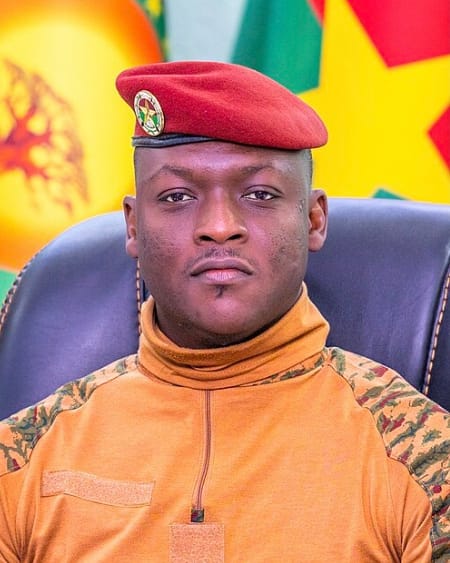
Across West Africa, Captain Ibrahim Traoré’s red beret has become a symbol of defiance for people disillusioned with political leadership. Since taking power in Burkina Faso in September 2022, the military ruler has promoted resource nationalism, challenged traditional foreign partnerships, and promised to reclaim national control over the economy.
But is Traoré delivering measurable change, or is the image running ahead of the evidence? And does his experiment risk repeating the tragedy of Thomas Sankara, Burkina Faso’s revolutionary president, assassinated in 1987? Nigeria’s lesson is why accountable government matters more than the personality of whoever holds power.
Traoré’s most visible economic project is retaining more value from Burkina Faso’s gold. The country’s 2024 Extractive Industries Transparency Initiative report recorded production of 60.77 tonnes. The government later announced that 2025 output exceeded 94 tonnes, but the Ministry of Mines’ 2025 statistical yearbook, published in 2026, records 90.8 tonnes.
On September 28, 2026, Captain Ibrahim Traoré inaugurated RAFFINOR-BF, Burkina Faso’s first national gold refinery, in Ouagadougou. According to the Ministry of Mines, the facility’s first phase has a theoretical annual refining capacity of 164 tonnes, with a proposed second phase expected to increase that capacity to 515 tonnes. The government puts the project’s investment at CFA11 billion, financed mainly through the state-owned precious-metals company, SONASP, and private partners. The inauguration also marked the processing of the refinery’s first gold bars. The establishment of the facility represents a significant step in Burkina Faso’s effort to expand domestic mineral processing, retain more value from its natural resources, create employment, and strengthen its position in the gold industry. Its stated refining capacity provides an industrial foundation for that ambition, while domestic processing could generate additional economic opportunities and increase value within the national economy.
Claims circulating online that Burkina Faso has generated $18 billion from gold under Traoré should, however, be understood in their proper financial context. The figure has been associated with the cumulative value of gold exports, not the government revenue of $18 billion. Gross export value is distinct from taxes, royalties, dividends, and funds received by the state. The distinction matters because the economic benefits of resource nationalism extend beyond the volume or value of mineral exports. They include domestic industrial development, employment, public revenue, and the extent to which the country’s natural wealth contributes to the living standards of its citizens.
The economic experiment is unfolding alongside a contraction of political and civic space. On January 29, 2026, Burkina Faso’s authorities approved the dissolution of political parties and the repeal of the laws governing them. In April 2026, Amnesty International reported that 118 nongovernmental organisations and associations had also been dissolved.
After the government suspended the UN Human Rights Office’s operations, High Commissioner Volker Türk announced on July 2, 2026, that the office would close by November 30. Human Rights Watch warned that the closure would remove an important independent presence able to monitor and document abuses. Burkina Faso faces a devastating insurgency and must protect civilians, but insecurity cannot make scrutiny illegitimate.
The military transition was extended for another five years in May 2024, postponing the expected return to civilian rule. Burkina Faso, Mali, and Niger formally left ECOWAS on January 29, 2025, and have pursued closer integration through the Alliance of Sahel States.
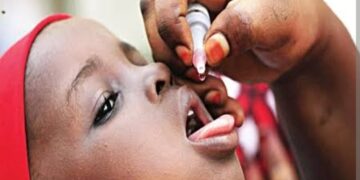
Thomas Sankara assumed power on August 4, 1983, following a military coup that overthrew President Jean-Baptiste Ouédraogo. At 33, he embarked on an ambitious political and socioeconomic transformation aimed at reducing Burkina Faso’s dependence on foreign assistance, strengthening national self-reliance, and redirecting public resources towards development. His government pursued agricultural reforms, expanded vaccination programmes, promoted literacy, invested in public infrastructure, and championed women’s rights, including measures against forced marriage and female genital mutilation. He also placed environmental protection and the fight against corruption at the centre of his revolutionary programme. In 1984, he renamed the country Burkina Faso, replacing its colonial-era name, Upper Volta, with a name meaning the land of upright people. Yet his administration’s reformist ambitions coexisted with increasingly authoritarian methods. Political opposition was restricted, independent trade union activity came under pressure, and revolutionary institutions exercised considerable power without the safeguards of an independent democratic system.
On October 15, 1987, Sankara was assassinated alongside twelve members of his entourage during a military coup that brought his former ally, Captain Blaise Compaoré, to power. After ruling Burkina Faso for 27 years, Compaoré was removed in a popular uprising in October 2014. On April 6, 2022, a military tribunal in Ouagadougou convicted him in absentia of complicity in murder and an attack on state security, sentencing him to life imprisonment for his role in the 1987 events. The verdict marked a significant judicial reckoning with Sankara’s assassination, although questions about the full extent of international involvement have remained part of the wider historical debate.
When political protection depends on personal loyalty, a reform project becomes vulnerable to betrayal and reversal. Compaoré ruled for 27 years before being ousted in 2014. Sankara’s fate should caution Traoré against weakening independent institutions in the name of revolution.
Traoré’s appeal in Nigeria reflects the gap between government revenue and citizens’ daily experience. The Federal Ministry of Finance reports net FAAC revenue of ₦21.9 trillion in 2025, up from ₦15.2 trillion in 2024, an increase of about 44 percent. Yet higher allocations should produce better schools, hospitals, roads, electricity, or jobs. The National Bureau of Statistics reported headline inflation of 14.06 percent in October 2026 and food inflation of 19.13 percent. Slower inflation does not restore earlier prices.
The question for Nigerian leaders is simple: where is the public value from the money distributed? Auditor-General reports, FAAC disclosures, and the Nigerian Open Contracting Portal provide starting points for tracing expenditure and procurement. Nigeria must draw four lessons. First, governments should publish project-level spending and evidence of completion. Second, audit queries must receive timely investigation and consequences. Third, industrialisation, including refining, mineral processing, and agricultural manufacturing, requires competitive procurement and transparent contracts, not executive decree. Fourth, independent courts, credible elections, a free press, and civil society must be protected, especially when they challenge those in power.
Internal procurement records reviewed during a three-month investigation reveal that the municipal water authority awarded ₦1.4 billion in emergency infrastructure contracts to three newly incorporated companies between January and August 2025, bypassing mandatory open-bidding procedures. Corporate registry filings show that the companies were registered less than two weeks before the tenders were issued and share a single registered address in Abuja. Physical inspections of the project sites further established that work on the contracted borehole rehabilitation projects had not commenced. Agency officials initially justified the accelerated procurement process as necessary to avert a dry-season water shortage. However, independent engineering audits found no formal emergency declarations authorising the departures from normal procurement procedures. Despite subsequent written requests for the disbursement records, the authority has not provided the requested ledgers, leaving critical questions about the handling of the ₦1.4 billion, the selection of the contractors, and the status of the projects unanswered.
Nigeria does not need a military messiah. It needs elected leaders who turn public revenue into measurable improvements and accept scrutiny without treating criticism as hostility. Africa’s future will not be secured by the colour of a leader’s beret or speeches about sovereignty. It will depend on institutions strong enough to hold every leader accountable, and citizens free to demand results.
Daniel Nduka Okonkwo is an investigative journalist, human rights advocate, and policy analyst based in Nigeria. He is the founder and publisher of Profiles International Human Rights Advocate (PIHRA), a platform documenting the courage of human rights defenders and examining issues of governance, accountability, security, and fundamental rights.
His reporting on Nigerian governance, security-sector accountability, public finance, and human rights has appeared in Sahara Reporters, Vanguard, Daily Trust, African Defence Forum, Opinion Nigeria, and Daily Intel.
Read more of his work on the PIHRA website:
https://www.profilesinternationalhumanrightsadvocate.com.ng/
For tips, feedback, or collaboration, contact him at dan.okonkwo.73@gmail.com.