
























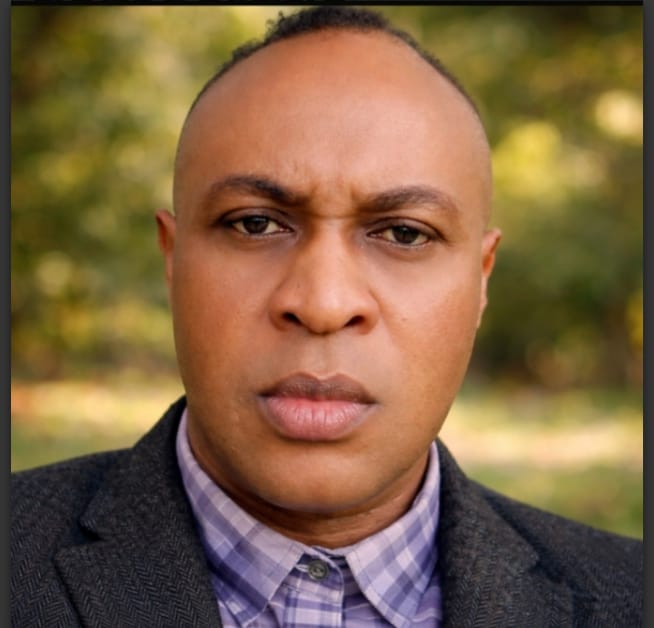
By Daniel Nduka Okonkwo
A coup does not cure corruption; it merely changes the uniform of those who wield power. Nigeria’s own history offers a brutal warning: when soldiers seize power, democracy is not the only casualty, constitutional rule, civil liberties, economic stability, and the people’s right to choose their leaders are often swept aside with it. As one stark warning puts it, “a coup does not fix corruption; it only transfers it to a new uniform.” Democracy may be messy, frustrating, and painfully slow, but it gives citizens the power to remove bad leaders without bullets, allows dissent without fear, and provides a constitutional battlefield where corruption, abuse of power, and failed leadership can be challenged through institutions rather than the barrel of a gun.
Military rule offers no magic cure. It breaks the law in the name of restoring order, suppresses the very freedoms needed to expose wrongdoing, and does not, merely by virtue of wearing a uniform, put food on the table, create jobs, strengthen hospitals, or make a corrupt system honest. The choice, therefore, is not between a perfect democracy and a perfect military government, there is no such choice. It is between a system that allows citizens to challenge bad governance and change their leaders peacefully, and one that takes that power away from them by force.
But there is an important distinction to maintain: the alleged coup plot currently before the courts must be judged on the evidence presented in court, not on assumptions, political rhetoric, or historical fears. The presumption of innocence remains fundamental, and allegations of an attempt to overthrow a constitutional government are serious enough to demand both rigorous prosecution and equally rigorous scrutiny of the evidence. The court, not public speculation, must ultimately determine what happened, who was responsible, and whether the evidence meets the legal threshold required for conviction.
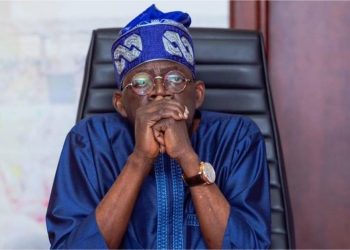
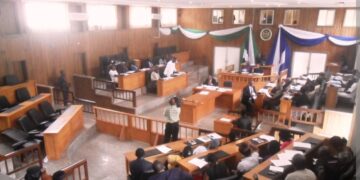
The most consequential battles for a democracy are not always fought in the streets. Sometimes, they unfold quietly inside a courtroom, where a single statement can be challenged, a piece of evidence dissected, and an allegation powerful enough to shake a nation forced to withstand the discipline of proof. That is where Nigeria finds itself in Abuja, as the alleged 2025 plot to overthrow President Bola Tinubu comes under judicial scrutiny. What began as an allegation of an attempt to subvert constitutional government has now entered a far more exacting arena, one where uniforms carry no special authority, accusations cannot substitute for evidence, and the credibility of the state itself may depend on how convincingly it proves its case. Beyond the defendants, the prosecution, and the witnesses, therefore, lies a question of enormous consequence: can Nigeria confront an alleged threat to its constitutional order without compromising the very rule of law that the Constitution exists to protect?
It must be stated plainly from the outset, and kept in view throughout, that this matter remains sub judice. Every individual named in connection with the alleged plot is, under Nigerian law and basic principles of justice, presumed innocent until a court of competent jurisdiction says otherwise. What follows is a synthesis of what has been reported and what the proceedings themselves have revealed, not a verdict.
The prosecution’s case rests on two fronts. Before the General Court Martial, more than thirty-six serving military personnel face trial behind closed doors, in proceedings shielded from public view because of the sensitivities of military justice. The alleged operation is said to have been spearheaded by Colonel Mohammed Ma’aji, whose captured notes have become central to understanding not only the alleged mechanics of the plot but also the grievances said to have driven it. Separately, before the Federal High Court in Abuja, six more prominent co-defendants, including a retired Major General, a retired Navy Captain, and a serving Police Inspector, face thirteen criminal counts spanning treason, terrorism, and money laundering. These are among the gravest charges known to Nigerian law, and the stakes for the accused are correspondingly severe, with potential penalties reportedly including the death sentence.
Yet what has emerged from the courtroom itself is arguably more consequential than the charges on paper. Defence counsel have mounted an aggressive challenge to the voluntariness of the extra-judicial statements at the heart of the prosecution’s case, arguing that handwritten confessions were extracted through unlawful means. That challenge forced Justice Joyce Abdulmalik to halt the substantive trial and order a trial-within-a-trial, a rare and important procedural step whose purpose is to determine whether the disputed confessions can be admitted as evidence. In a democracy governed by the rule of law rather than decree, this is precisely how such disputes should be resolved: through adversarial testing rather than assumption. Whatever the eventual outcome, the proceeding demonstrates that the evidence being relied upon by the prosecution is being subjected to judicial scrutiny rather than simply accepted at face value.
The prosecution has countered by playing video-recorded interrogation sessions in open court. In these clips, some defendants, including the retired Navy Captain and the Police Inspector, are shown appearing to acknowledge prior knowledge of a plot that they did not report, while the retired Major General has maintained his denial throughout. Adding a further layer of intrigue, leaked dossier material alleges that the Police Inspector was simultaneously running what has been described as a parallel racket, charging alleged conspirators for unauthorised advance inspections of the Presidential Villa’s gates even as investigators closed in. The authenticity, context, and evidentiary status of such leaked material remain matters for proper scrutiny. If the allegations are ultimately established through admissible evidence, however, they could suggest that the alleged network was driven not only by political or institutional grievances but also by opportunism and personal enrichment.
That distinction matters enormously. Prosecutors have presented a picture of a multi-layered assassination list allegedly targeting President Tinubu, Vice President Kashim Shettima, Senate President Godswill Akpabio, and Speaker Tajudeen Abbas, alongside the recovery of heavy weaponry. But the contents of the seized notes attributed to Colonel Ma’aji suggest a more complicated picture, one rooted less in a clearly defined political programme than in institutional frustration, welfare gaps within the military, stalled promotions, the rising cost of living, and lingering anger over the removal of the petrol subsidy. Officials have themselves suggested that the underlying motives were closer to financial grievance and nostalgia for a bygone military order than to any unified political programme. None of these grievances excuses an alleged plot to seize power by force. They do, however, complicate any simple narrative of villains and heroes, while pointing to structural problems within Nigeria’s security architecture that will outlast this trial regardless of its verdict.
The broader context is worth stating clearly because it is the argument the state itself is implicitly making by prosecuting this case through civilian courts rather than resorting to extrajudicial means. Nigeria’s history with military rule, from 1966 to 1979 and again from 1983 to 1999, was a history of suspended constitutions, decrees that criminalised dissent, indefinite detention without trial, and a culture of impunity that took a generation of civil society struggle to unwind. The annulment of the 1993 presidential election, won by Moshood Abiola, remains the starkest reminder of how quickly a military establishment can override the democratic will when it decides its own judgment supersedes the ballot box.
Whatever the very real shortcomings of the current democratic order, including corruption, insecurity, and the economic hardship that features so prominently in the alleged plotters’ own grievances, the alternative offered by history is not reform but repression. Coups do not provide a guaranteed solution to corruption or insecurity. Recent experience in Burkina Faso and Mali offers little evidence that military takeovers provide an easy route out of those problems; both countries have continued to face serious militant violence under military-led governments. That comparison is not incidental to this trial. It is part of the backdrop against which Nigerians must understand why due process, however slow and imperfect, remains preferable to the swift justice that a military tribunal or a firing squad outside the constitutional order might offer.
What is ultimately on trial in Abuja is not only the guilt or innocence of the individuals charged, a question the courts alone are entitled to answer, but the resilience of Nigeria’s constitutional order itself. The government’s decision to prosecute through an open, if partially closed-door, judicial process rather than suppress the matter entirely, its willingness to allow defence lawyers to contest the voluntariness of confessions, and the judiciary’s readiness to halt proceedings until that question is resolved all provide evidence that the case is being subjected to institutional scrutiny.
But the use of a courtroom alone does not establish the truth of the allegations. Nor does a prosecution, by itself, prove that the state has got every aspect of the case right. The credibility of the process will ultimately depend on whether the evidence survives cross-examination, procedural challenges, and the demanding standards of criminal justice.
The danger lies not in this trial’s outcome alone but in what happens if the grievances that reportedly animated the alleged plotters, poor welfare, stalled careers, economic hardship, and a sense of abandonment within the ranks, are left to fester once the courtroom lights dim. A conviction, an acquittal, or a mixed verdict will settle the legal question. It will not, on its own, settle the deeper one.
Nigeria does not need a verdict manufactured by fear, nor a conviction secured by political convenience. If the alleged plot was real, the courts must establish it through admissible evidence. If the evidence fails to prove the charges, the courts must say so. Either outcome would be preferable to allowing suspicion, propaganda, or military nostalgia to decide questions that belong to the Constitution.
The courtroom, ultimately, is where the truth must be tested and where, in a democracy governed by law, the truth must be allowed to win.
Daniel Nduka Okonkwo is an investigative journalist, human rights advocate, and publisher, and the founder of Profiles International Human Rights Advocate, PIHRA. His work focuses on governance, accountability, and the protection of fundamental rights across Nigeria and Africa. His reporting has appeared in Vanguard, Daily Trust, Sahara Reporters, African Defence Forum, Opinion Nigeria, and Daily Intel, among others.
Read more of his work on the PIHRA blog: https://profilesinternationalhumanrightsadv.blogspot.com
For tips, feedback, or collaboration, reach him at dan.okonkwo.73@gmail.com