















By Daniel Nduka Okonkwo
Nigeria’s most ambitious industrial project, the Dangote Petroleum Refinery, has been thrust into a storm of legal and regulatory battles just months before its anticipated Initial Public Offering. The Nigerian Securities and Exchange Commission recently moved to block the premature promotion of the listing, warning that no official prospectus had been filed or approved, even as certain capital market operators solicited advance subscriptions and promised guaranteed allocations to unsuspecting members of the public. Simultaneously, the refinery is locked in a courtroom confrontation with the Nigerian National Petroleum Company Limited, which has accused the Dangote group of seeking to monopolise fuel supply, a move the state oil company warns could trigger supply disruptions, price instability, and threats to national energy security. With the refinery’s 650,000-barrel-per-day capacity positioned to fundamentally reshape Nigeria’s energy landscape, these disputes have sharpened concerns over market regulation, competition policy, and the refinery’s future revenue outlook ahead of a planned September listing.
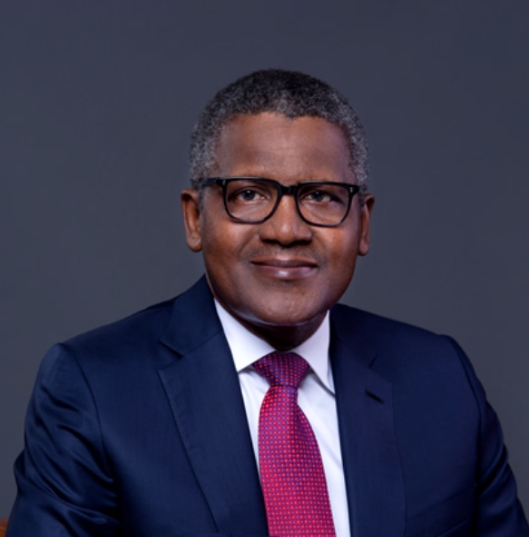
Yet beneath these battles lies a deeper and more consequential question: did Aliko Dangote enter this venture as a patriotic industrialist determined to rescue Nigeria’s fragile economy and end its decades-long dependence on imported refined fuel, or is the refinery ultimately a vehicle designed to cement his legacy and consolidate a generational fortune? For many Nigerians, the facility represents genuine hope, an opportunity to stabilise fuel supply, generate large-scale employment, and strengthen national energy security. For critics, however, it reflects the dangerous consolidation of private power in a sector too vital to the country’s survival to be governed by a single commercial interest. This tension between national salvation and personal legacy will ultimately define how the Dangote Refinery is recorded in Nigeria’s economic history, and how its IPO is judged by the investors and citizens who will bear its consequences.
How Africa’s most anticipated oil listing collided with a market domination battle, a regulatory crackdown, and a $20 billion power struggle that is reshaping Nigeria’s energy future
Before a single share certificate had been printed, before a prospectus had been filed, before the Securities and Exchange Commission of Nigeria had received so much as a formal letter of intent, the feeding frenzy had already begun. Capital market operators, some licensed and others operating in the murky grey zones of Nigeria’s financial ecosystem, were soliciting advance subscriptions, offering guaranteed allocations, and pre-funding investment accounts linked to what they promised would be the most transformative public offering in African history: the Dangote Petroleum Refinery IPO.
The SEC moved fast. The regulator instructed brokers to take down all promotional materials and reverse all funds collected from the public within 24 hours, declaring the pre-IPO solicitations as “unwholesome,” a term signifying a form of market manipulation capable of misleading investors and distorting market expectations. The message was blunt: no official prospectus had been filed, no application had been approved, and the IPO, though highly anticipated, remained a future event rather than a present reality.
Yet the frenzy was entirely understandable. The Dangote Petroleum Refinery and Petrochemicals FZE, a 650,000-barrel-per-day colossus situated on the Lekki Free Trade Zone in Lagos, carries an estimated valuation of between $39.1 billion and $50 billion. The Dangote Group plans to list up to a 10 percent equity stake on the Nigerian Exchange Group, aiming to raise somewhere between $2 billion and $5 billion. If it proceeds, analysts say it would rank as the largest public offering ever to emerge from the African continent.
But behind the investor frenzy and the breathtaking valuation numbers lies a more complicated and more dangerous story, one involving accusations of monopoly, a high-stakes legal battle with the state oil company, a regulatory feud that ended in a public official’s resignation, and the fundamental question of whether one man’s industrial ambition has grown too large for any single market to contain.
To understand the Dangote controversy, one must first understand Aliko Dangote himself. He did not begin as a titan. He began with a 500,000 Naira loan from his uncle and a simple, ruthless insight: Nigeria’s vast consumer market was perpetually undersupplied, and those who controlled supply controlled everything.
He established the Dangote Group in 1981, initially importing and trading agricultural commodities. Then, with a precision that his rivals came to dread, he pivoted. Instead of continuing to import, he began manufacturing locally, capturing every layer of value along the supply chain. He built Dangote Sugar Refinery, among the largest of its kind in the world, and constructed salt, flour, and pasta production plants. He expanded aggressively from 2000, acquiring state-owned companies and constructing the Obajana Cement Plant in Kogi State, the largest cement facility in Sub-Saharan Africa. Today he holds approximately 86 percent of Dangote Cement.
Each step followed the same template: identify a commodity Nigerians could not do without, eliminate import dependency, and establish dominant domestic production. Critics called it monopolism. Supporters called it industrial policy in practice. Dangote called it business.
Then came the refinery, and everything changed in scale and consequence.
The $20 billion facility, in which Dangote personally holds a 92.3 percent stake, was designed to accomplish what no Nigerian government had been willing or able to do in over six decades: build domestic refining capacity sufficient to end the country’s humiliating dependence on imported fuel. Nigeria, an OPEC member and one of Africa’s largest oil producers, had for generations exported crude oil and re-imported it as refined petroleum products, at enormous cost to the national treasury and to the value of the naira.
The financing structure reflects the breadth of the enterprise. The NNPCL injected $1 billion for a 7.24 percent equity stake via a forward crude sale agreement. The CBN provided approximately $2.7 billion in foreign exchange allocations over a decade alongside N125 billion in domestic currency interventions. A syndicate of domestic and foreign banks contributed approximately $5.5 billion in commercial debt. The Dangote Group has already paid off more than $2.5 billion of those loans, and former CBN Governor Godwin Emefiele publicly confirmed that total outstanding debt had dropped from over $9 billion to $2.7 billion.
In September 2024, the refinery filed suit FHC/ABJ/CS/1324/2024 in the Federal High Court in Abuja, seeking N100 billion in damages against the NMDPRA for issuing import licences to rival marketers: NNPC Ltd, Matrix Petroleum Services Limited, AYM Shafa Limited, A.A. Rano Limited, T. Time Petroleum Limited, and 2015 Petroleum Limited. Counsel Ogwu Onoja argued that the licences violated Sections 317(8) and (9) of the Petroleum Industry Act in the absence of a verified product shortfall.
NNPC turned the argument back against Dangote entirely. In its counter-filing, the state oil company argued that granting Dangote’s request would expose Nigeria to supply disruptions, price instability, and threats to national energy security. It further contended that the refinery had failed to provide credible, independent, or verifiable evidence of its capacity to meet total national fuel demand. Independent marketers warned that restricting import licences would weaken market competition and threaten supply stability nationwide.
Then, in July 2025, the refinery quietly discontinued the lawsuit without explanation. The withdrawal leaves unresolved a question now material to the IPO: if the refinery cannot legally compel marketers to source locally, what happens to projected revenues, and what does that mean for a valuation of between $39 billion and $50 billion?
The lawsuit was only one front in a broader institutional war. Former NMDPRA chief Farouk Ahmed consistently resisted any move perceived as concentrating market power in a single entity. That institutional position curdled into an open feud. Dangote publicly accused Ahmed of colluding with international traders to frustrate local refining and alleged that Ahmed lived beyond his legitimate means, claiming four of his children were enrolled in expensive Swiss secondary schools and raising concerns of regulatory capture and abuse of office.
Ahmed later resigned. Whether that departure was voluntary or effectively compelled remains contested. What is beyond dispute is the signal it sent: the exit of a senior regulator in the middle of a battle over the country’s fuel market is not a neutral event.
Dangote rejects the monopoly characterisation. He argues that he has never prevented others from investing in refining capacity, that his success rests on legitimate capital deployment rather than state-backed privilege, and that he deliberately withdrew from plans to enter the Nigerian steel sector to avoid precisely this kind of accusation. The refinery’s management has also dismissed allegations of circular export and re-import schemes as commercially absurd.
The structural reality, however, is not so easily addressed by statements of intent. A single entity that controls a 650,000-barrel-per-day refinery has sought court orders against competitor import licences, and is simultaneously preparing the country’s largest public offering, occupies a position of concentrated market power that warrants rigorous, ongoing regulatory scrutiny, regardless of the owner’s good faith.
The planned listing arrives weighted with all of this history. The SEC’s crackdown on premature promoters rightly protects ordinary Nigerians from fraud. But it also signals the regulatory environment in which this offering will unfold: disciplined, process-driven, and alert to the risks of speculative excess around a high-profile national asset.
The central question the IPO forces into the open is not merely whether the offering will succeed. It is whether the refinery, in its current configuration of ownership, market positioning, and legal strategy, serves the national interest in proportion to the extraordinary public and institutional support it has received. The NNPCL’s $1 billion equity stake was funded with national resources. The CBN’s $2.7 billion in foreign exchange allocations represented a sovereign commitment during a period of acute currency pressure. The $5.5 billion in commercial bank debt was extended within a regulatory framework underwritten by the Nigerian state. These are not purely private investment decisions. They represent a national bet.
For the millions watching, as prospective investors, as fuel consumers, and as citizens of a country that waited six decades for domestic refining capacity, the outcome of the Dangote IPO saga is not merely a capital markets event. It is a referendum on whether Nigeria can build institutions of sufficient scale to transform the country’s economic fate, while ensuring that no institution, however impressive its achievement, accumulates power that exceeds the capacity of any regulatory framework to govern.
That question does not have a simple answer. But it is the right question to ask.
Daniel Nduka Okonkwo is an investigative journalist, human rights advocate, and policy analyst based in Abuja, Nigeria. He is the publisher of Profiles International Human Rights Advocate, a platform focused on accountability journalism, governance reporting, and the documentation of human rights issues across Africa. His work examines the intersection of political power, institutional accountability, systemic failure, and the human impact of corruption, with particular focus on Nigeria and the wider African continent.
Okonkwo’s reporting and analysis have been published in Sahara Reporters, African Defence Forum, Daily Trust, Vanguard, Daily Intel, Opinion Nigeria, African Angle, Local Newsbreak, and other international media outlets. His work is driven by a commitment to transparency, democratic governance, and justice. He also collaborates with Daniels Entertainment on human rights initiatives, extending his advocacy beyond traditional journalism into broader public engagement.
He is based in Abuja, Nigeria, and can be reached at dan.okonkwo.73@gmail.com.