





















Whatever label the government puts on it, handing a 117-year-old public school to private hands on a 35-year lease puts education further out of reach for millions of Nigerians.
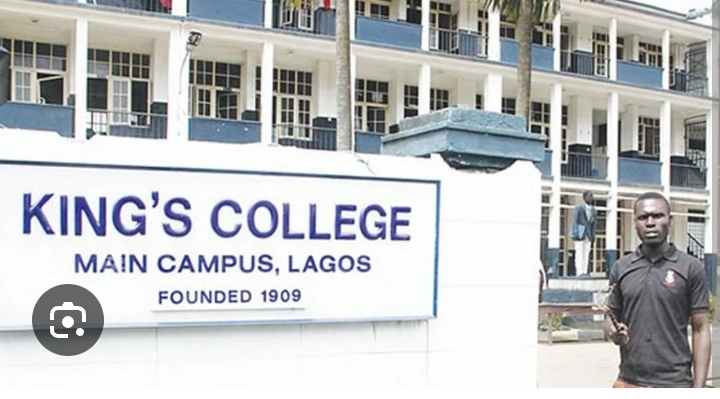
For 117 years, King’s College in Lagos has done something rare in Nigeria: it has taken clever children from any background and given them a first-rate education. Its alumni include ministers, judges, professors and captains of industry. That history is now at the centre of a row that says a great deal about where Nigeria is heading.
The federal government insists it is not selling the school. Ministers say ownership stays public, and that what is on the table is a 35-year public-private partnership under which the King’s College Old Boys’ Association (KCOBA) would take over management, operation and maintenance. The alumni say they will raise a ₦100bn endowment to rescue a campus that has fallen into disrepair. Federal allocations, meanwhile, would be phased out over six months.
Read that last sentence again. When the state withdraws its funding, hands over control for more than a generation and asks someone else to make the numbers work, the legal title deed is a technicality. Call it a concession, a partnership or a pilot. In substance it is privatisation, and Nigerians have every reason to be alarmed.
Start with the assurances, because they are thinner than they look. We are told fees will not rise. But a promise made by one administration cannot bind the next three decades. Someone must pay for the upgrades, the running costs and the return that investors and financiers will expect. Once public money leaves, those costs land on one of two places: the students’ families, or the quality of what is on offer. Neither is good for the poor.
Then consider the economics of Nigerian life today. The naira has lost much of its value, food prices have squeezed households that were already stretched, and millions of parents are choosing between school fees and the next meal. Nigeria already has one of the world’s largest populations of out-of-school children, with figures commonly put at more than 18 million. In that context, the unity colleges are among the last places where a child from a modest home can still get an excellent education on merit, without the family’s bank balance deciding the outcome. Erode that, and you do not just change one school. You close one of the few remaining doors.
There is also the question of what makes King’s College so attractive. It sits on a vast expanse of land, and it is anchored by buildings and grounds that any developer or business interest would covet. In a city like Lagos, where land is gold, that matters. I do not doubt the sincerity of many old boys who want to save their alma mater. But once a public asset like this is placed under long-term private management, its future will be shaped by whoever holds the purse strings, and those people will not always be sentimental alumni. Commercial interests are motivated by returns, not by the slow, unglamorous work of building a fair education system. When the pressure comes to monetise the land, to add revenue streams or to cut costs, there will be little left to protect the child who cannot pay.
Officials say this is a one-off and that no other unity college will follow. Nigerians have heard such assurances before. Pilots become precedents. If a flagship school can be handed over on these terms, the argument for doing the same elsewhere will write itself: if it worked for King’s, why not for Queen’s, or for the colleges in Sokoto and Enugu? The parents and teachers who protested at the school gates understood this at once. So did the unions, including the Association of Senior Civil Servants of Nigeria. They are not resisting improvement. They are resisting the logic of the slippery slope.
None of this excuses the state of the campus. Dilapidated classrooms are a failure of government, not an argument for abandoning it. Years of underfunding created this crisis, and it is convenient to cite the wreckage as proof that the public sector cannot cope. But the remedy for a government that has failed to fund its schools is to fund them, not to declare the school unsalvageable and hand over the keys. If alumni want to give back, there are ways to do it that do not require the state to walk away: endowments, scholarships, capital grants and oversight boards with real powers, all sitting alongside continued public funding and public accountability.
Nigeria’s constitution and its international commitments recognise education as a right, not a commodity. The test of any reform is simple: does it widen access or narrow it? Does it make it easier for a bright child from Mushin or Makoko to reach the classroom, or harder? On that test, this arrangement fails.
The government should suspend the concession, publish the full agreement, and open a genuine public consultation with parents, teachers and students. It should then do what it should have done years ago: fund its schools properly. A country that wants a better future cannot build it by pricing its poorest children out of the best classrooms it has.