

























By Daniel Nduka Okonkwo
For nearly a decade, the deaths of Nigerians in South Africa have arrived in waves. A murder here, a mob attack there, a trader found dead, a family demanding answers, a diplomatic protest from Abuja, an assurance from Pretoria, and then, months or years later, another Nigerian life lost. The cycle has repeated so often that the most disturbing question is no longer simply how many Nigerians have died. It is why so many have died without producing a durable system capable of preventing the next death, prosecuting perpetrators, compensating victims, and protecting Nigerians forced to abandon their lives abroad.
The figures themselves vary depending on who is counting and over what period, and that variation deserves honesty rather than a single tidy number presented as a settled fact. Nigeria’s Minister of State for Foreign Affairs, Sola Enikanolaiye, said in July that 98 Nigerians had been killed in South Africa since 2022 in mob actions, hate-related violence, and alleged extrajudicial killings, a figure disclosed during talks in Abuja with South African Foreign Minister Ronald Lamola. Community organisations have reported a broader toll. The Nigerian Union South Africa and the Nigerian Citizens Association South Africa have said that at least 105 Nigerians were killed over the past seven years. Nigeria’s ambassadorial representative to South Africa, Femi Fani-Kayode, said in a September 11 statement that more than 100 Nigerians had died since 2022, including eight in 2026 alone, and alleged that more than 30 of those killings over the past four years involved officers of the South African Police Service and the South African National Defence Force. These numbers are not necessarily contradictory. They cover different periods and different methodologies. But whichever figure is used, the underlying fact is beyond dispute. A large number of Nigerians have died in South Africa amid a recurring pattern of anti-foreigner violence and allegations of abuse by the very security forces meant to protect them.
The killings have continued into September. Bishop Taiwo Michael Fakunle was shot at his residence in Kensington, Johannesburg, on September 4, and James Uchechukwu Nwankwo died the following day in Somerset West, Cape Town, in circumstances Nigeria’s Foreign Ministry attributed to what it called gruesome interrogation techniques by South African police. These two cases matter precisely because they should not be flattened into a single category before the facts are established. Fakunle’s killing has not been officially confirmed as a xenophobic crime, and no motive has been conclusively identified. Nwankwo’s death raises a more serious question because Nigerian authorities have directly alleged police involvement. Responsible reporting resists collapsing every death of a Nigerian in South Africa into a confirmed xenophobic killing before the evidence supports that conclusion, but the absence of a proven motive in one case does not erase the broader pattern in the others, and if anything, it makes the demand for a transparent, independent investigation more urgent.
If Ambassador Fani-Kayode’s allegation that more than 30 Nigerians have been killed by South African police and defence personnel over four years is established, it represents something fundamentally different from the familiar story of mob violence against foreigners. A mob attack is a failure of public order. A police killing, if unlawful, is a failure of state accountability, and a repeated pattern of such killings raises questions about institutional culture, oversight, and whether foreign nationals receive the same protection under the law as South African citizens. Nigerian officials have raised exactly this concern directly with Pretoria, and South Africa has, in turn, rejected xenophobia as a matter of government policy while insisting that criminality and immigration enforcement must also be part of the conversation. Both positions deserve to be weighed against verifiable outcomes rather than settled by statements from either capital. How many perpetrators have been arrested? How many have been prosecuted? How many have been convicted? How many police-involved killings have been independently investigated? Those questions, not condemnations, should now anchor the bilateral relationship.
The economic toll has been just as severe and just as poorly documented. Hundreds of Nigerian-owned shops, vehicles, and small businesses have been looted, vandalised, or burned during successive waves of unrest in Johannesburg, Pretoria, and beyond, yet neither government has published a comprehensive figure for the value of destroyed Nigerian property. Individual traders describe losses running into millions of rand, but anecdote is not evidence, and if Abuja intends to pursue compensation, it needs a properly verified national register containing the names of affected Nigerians, the location and estimated value of their losses, police case numbers, and the status of each claim. Without that, demands for restitution remain diplomatic rhetoric rather than an actionable case. It is also worth stressing, because the attacks are frequently misread, that the victims are not confined to undocumented migrants. Reports and diplomatic briefings have consistently shown that attacks can affect Nigerians and other Africans based on nationality rather than legal status, including legitimate business owners and documented residents. Nigeria’s own position has been that any Nigerian accused of a crime abroad should face lawful arrest and prosecution rather than mob justice, a principle that should hold with equal force in both directions.
Nigeria’s response has combined real emergency action with a conspicuous absence of lasting structure. Between June and July 2026, the federal government funded five repatriation flights operated jointly by Air Peace and South African Airways, while additional Nigerians returned through privately supported arrangements, including 66 who flew home on a South African Airways flight on June 24. By September, Nigeria’s Acting High Commissioner to South Africa, Ajayi Alexander, disclosed that the total number repatriated in 2026 had reached 1,695, made up of 1,490 through government-sponsored arrangements and 205 through private support. The Redeemed Christian Church of God separately announced funding of $265,854 to purchase 500 one-way tickets for distressed Nigerians seeking to return home amid renewed threats. President Bola Tinubu authorised the government-funded operation, while Nigeria also took the issue to the African Union, with the government seeking to have the recurring attacks placed on the agenda of the AU’s 40th Ordinary Session scheduled for January 2027. These are not small measures. But the reliance on private citizens and religious organisations to support additional evacuations raises questions about the adequacy and reach of Nigeria’s emergency response architecture, and it raises a harder question that evacuation numbers alone cannot answer. What happens to the Nigerian trader whose shop is destroyed but who does not qualify for an emergency flight? What happens to the family of someone killed, once the condemnation has been issued and the cameras have moved on? Bringing people home is the first step, not the last, and there is little public evidence of a matching reintegration effort in the form of financial assistance, psychological support or help rebuilding a livelihood for those who return with nothing.
In July, the Senate debated and rejected a proposal to nationalise South African-owned companies operating in Nigeria, including MTN and DStv, and use the proceeds to compensate victims, choosing instead to press for diplomatic accountability and written safety assurances from Pretoria. That rejection was the right call. Seizing foreign assets would have endangered the jobs of thousands of Nigerians employed by those firms and invited serious legal and economic consequences without addressing the underlying problem. But rejecting indiscriminate retaliation is not the same as having no leverage. Nigeria can review bilateral agreements, insist on timelines for investigations, demand measurable security guarantees, and coordinate with other African governments whose citizens face similar treatment, all without resorting to the kind of retaliatory violence against South African businesses in Nigeria that the government has rightly and consistently warned its own citizens against.
On September 11, the National Assembly took its most concrete step yet, suspending official visits to South Africa and boycotting South African-hosted or organised legislative activities until further notice. The decision, contained in a statement signed by the Clerk to the National Assembly, Kamoru Ogunlana, under the leadership of Senate President Godswill Akpabio, was described as an expression of concern over the safety, dignity, and welfare of Nigerians living and conducting legitimate businesses in South Africa rather than a rupture of the broader relationship. It is a meaningful escalation after years of balancing outrage against strategic ties, but a boycott is only meaningful if it forms part of a wider strategy rather than standing alone as a gesture.
One further caution belongs in this account. Claims circulating this week suggesting that South Africa had shut its diplomatic missions in Lagos and Abuja in immediate reprisal for the current boycott should not be presented as a current fact without verification. The episode involving South African diplomatic missions and retaliatory attacks on South African businesses in Nigeria belongs to the earlier 2019 xenophobic crisis, not the present one. Its recirculation as breaking news this week is a reminder that virality is not verification. In a crisis already saturated with anger, recycled history reported as current fact can inflame public sentiment and invite exactly the retaliatory violence that both governments say they want to avoid.
The deeper institutional weakness this crisis exposes is how Nigeria protects its own diaspora. For decades, Nigerians abroad have sent remittances home, built businesses, funded relatives, and maintained economic ties that the state readily celebrates when the money arrives. That same urgency is far less visible when those citizens become victims, needing a lawyer, a case file, a compensation claim, or simply someone in government tracking whether their case was ever closed. What Nigeria needs is not another emergency response improvised after the next killing, but a standing framework that maintains a verified record of Nigerians abroad facing death, detention, violent attack or property loss, that assigns every serious case to a named official who follows it to conclusion, that negotiates a formal bilateral compensation mechanism with South Africa backed by enforceable arrangements rather than goodwill, and that ensures every evacuee is followed up after arrival rather than simply received at the airport.
South Africa, for its part, cannot demand respect for its sovereignty while failing to enforce its own laws in defence of foreign nationals lawfully within its borders. Its officials owe Nigerians and the wider region a public accounting of arrests, prosecutions, and convictions rather than repeated statements of condemnation. South Africa has said it opposes xenophobia and has committed to pursuing those responsible for attacks, but the credibility of those assurances will ultimately be measured by what happens in individual cases.
Nearly 100 officially acknowledged Nigerian deaths since 2022, a community estimate of more than 105 across a longer span, and nearly 1,700 Nigerians who returned from South Africa through government and privately supported repatriation arrangements this year alone are not a series of disconnected incidents. They are the record of a relationship that has produced strong words and emergency flights but not yet a system capable of delivering justice once the headlines fade. The dead cannot hear diplomatic assurances. The trader whose shop was burned cannot rebuild with a parliamentary resolution. Nigeria should build the institutional capacity to protect its citizens before the next attack and to pursue justice after it, and until South Africa matches its condemnations with prosecutions, the blood will keep staining this relationship, and another Nigerian family will eventually become the next statistic.
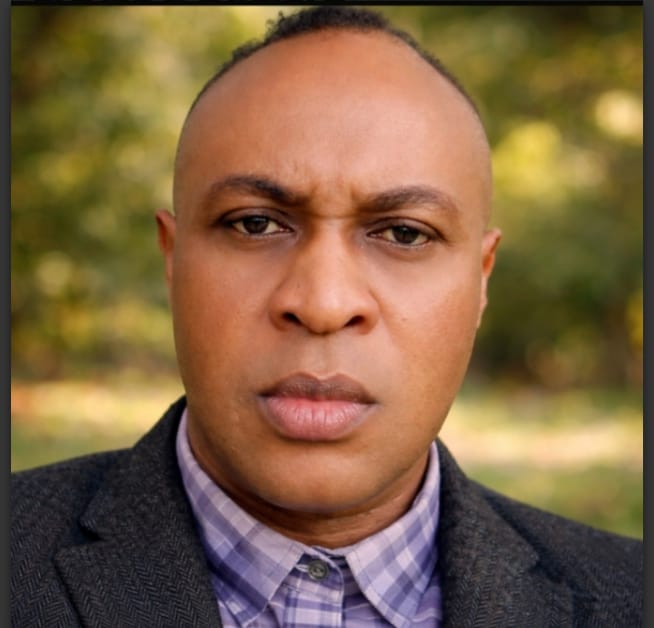
Daniel Nduka Okonkwo is an investigative journalist, human rights advocate, and publisher, and the founder of Profiles International Human Rights Advocate, PIHRA. His work focuses on governance, accountability, and the protection of fundamental rights across Nigeria and Africa. His reporting has appeared in Vanguard, Daily Trust, Sahara Reporters, African Defence Forum, Opinion Nigeria, and Daily Intel, among others.
Read more of his work on the PIHRA blog: https://profilesinternationalhumanrightsadv.blogspot.com
For tips, feedback, or collaboration, reach him at dan.okonkwo.73@gmail.com