



























By Daniel Nduka Okonkwo
In the early hours of Thursday, September 17, 2026, officers of the Nigeria Security and Civil Defence Corps opened a cell in Minna and found dozens of men dead. At least 37 of them had been arrested during raids on suspected illegal mining sites around Wushishi and Lukoto in Niger State on September 15 and 16. But the real question begins where the bodies end: why does human life appear to have become so easily expendable in Nigeria? How can a Nigerian leave home in the morning to earn a living and never return because of the conditions in which he was expected to work, live, or survive? Who accounts for these human losses, whether they occur at mining sites, in overcrowded detention cells, factories, forests, on highways, or in communities ravaged by banditry, kidnapping, and terrorism? And when people die, where is the system that answers their families, investigates what happened, determines responsibility, and provides meaningful redress? Behind every statistic is a human being, a father, a son, a brother, a husband, a breadwinner, or a young person whose family expected him to come home. They are not numbers. They are the people who put food on tables, pay school fees, and keep families alive. Yet across Nigeria, deaths linked to insecurity, unsafe working conditions, institutional negligence, and alleged failures of duty can disappear into statistics, committees, and official statements. Does Nigeria have a functioning system for compensating families whose loved ones die because those responsible failed in their duty? Or will the Minna deaths become another tragedy that dominates the headlines for a few days before the country moves on? This is the darker story behind illegal mining, and why the Minna deaths cannot be treated as an isolated incident. They expose a wider crisis of accountability and the protection of human life in Nigeria, a crisis whose consequences extend far beyond the country’s borders.
Governor Mohammed Umaru Bago says 67 suspected miners were held in that single cell. A survivor, Dauda Shehu, said they were jam-packed with no ventilation, that they banged on the door and raised the alarm, and that nobody answered.
The Corps initially pointed to a suspected disease outbreak, but the cause had not been determined. Questions have intensified over how a suspected disease outbreak could have killed so many detainees in a single overcrowded cell, while the precise cause of death remained undetermined. An intelligence assessment cited in the investigation pointed instead to overcrowding and poor ventilation. No definitive autopsy or toxicology findings had been publicly released at the time of this report, and an allegation circulating online that something was sprayed into the cell remains unconfirmed.
Then came the detail that should have stopped the country. Governor Bago himself said many of the dead were children aged 14 to 18 who had been working in the mines instead of going to school. One relative said his 17-year-old brother was among them. A video shared online shows dozens of young men whose bodies lie on the ground, most of them appearing to be teenagers. Individual ages have not been officially confirmed. One survivor has also challenged the toll and claimed that 59 people died. That figure is unverified, but the conflicting accounts show how little has been established.
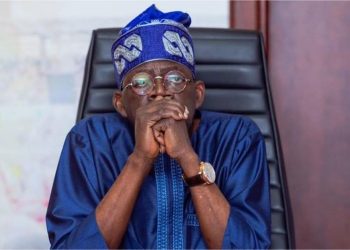
Minna erupted. Security forces used tear gas and gunfire as protesters took to the streets, and a government building was burned. The governor imposed a curfew, set up a committee of inquiry, and suspended mining activities across the state. The Federal Government suspended the Niger State commandant. President Bola Ahmed Tinubu ordered a full and transparent investigation and directed that any official whose actions, abuse, negligence, or dereliction of duty contributed to the deaths should be arrested and prosecuted. He also made clear that suspension is only an administrative step and cannot substitute for determining criminal responsibility where the evidence warrants prosecution.
Whether that promise reaches beyond the cell door is now the test.
From the lead-poisoned villages of Zamfara in 2010 to a locked cell in Minna in 2026, sixteen years have passed and the pattern has barely changed.
The men and boys who died were not the people who controlled this trade. They were its visible end. The powerful end has stayed invisible.
That is not journalistic speculation. In December 2023, Minister of Solid Minerals Development Dele Alake told the House of Representatives that much of the banditry, terrorism, and insecurity around mining is sponsored by illegal miners, and that these are powerful individuals, not people picking gold off the ground. They are Nigerians, he said, and foreigners are symptoms of the disease, not the disease itself.
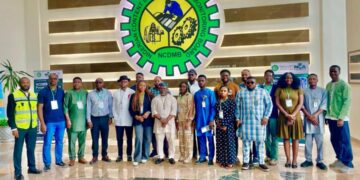
Nearly three years later, the public record reviewed for this investigation shows arrests of operators at the pit but no prosecution of the kind of sponsors the minister described. The Mining Marshals, an NSCDC unit, numbered 2,570 officers in late 2024 and reportedly grew to 2,670 by mid-2025. The minister has reported arrests and prosecutions involving illegal mining suspects, including foreign nationals allegedly linked to terrorism financing. An arrest is not a conviction, and a foreign face at a mining site is not proof of terrorism. But the question is unavoidable. How many of those cases reached the financiers?
The latest public figures released by the Minister in September 2026 show that between March 2024 and August 2026, the Mining Marshals had identified 374 illegal mining sites, cleared 108 of them, arrested 743 suspects, and prosecuted 165 cases involving 430 accused persons, with five convictions recorded. Those figures demonstrate that enforcement has expanded, but they still leave unanswered the central question of who finances, owns, and profits from the wider illegal mining networks.
Responsibility sits with the executive branch. Section 44(3) of the Constitution vests control of all minerals in the Federal Government, and mining is on the Exclusive Legislative List, so only the National Assembly can make laws on it. On paper, control is total. On the ground, it is not. In March 2024 the NSCDC said more than 1,175 illegal mining sites had been identified. That count is now more than two years old, and the public records reviewed for this investigation do not provide a directly comparable updated national figure.
The reason is structural. In May 2026, the Nigeria Extractive Industries Transparency Initiative said oversight is severely fragmented among the Ministry of Solid Minerals, the Mining Cadastre Office, Customs, the Financial Intelligence Unit, and several state agencies, each holding data in silos. The sector’s contribution to Nigeria’s economy remained small relative to the scale of the country’s mineral endowment. NEITI’s 2023 audit records the solid minerals sector at 0.72 per cent of GDP for the relevant mining activity. The $9 billion annual loss attributed to illegal mining remains an estimate, not an audited figure. A trade of that potential size is escaping the state.
The security dimension is the darkest part. Criminal networks operating around mining areas have been accused of taxing miners and demanding a share of extracted ore in return for access to mining locations. Analysts have also described arrangements in which criminal groups are protected in exchange for money and other benefits. When Nigeria lifted its five-year Zamfara mining ban in December 2024, the minister acknowledged that illegal miners had exploited the state’s resources during the suspension. The ban meant to starve armed groups of gold left the field to those who ignored it. In February 2026, suspected illegal miners at Zuzungi in Niger State killed a security operative and burned an NSCDC patrol vehicle.
Foreign hands are visible too. In March 2022, immigration officers in Niger State arrested more than 200 Chinese workers who had entered on tourist visas and overstayed. A senior ICPC official has blamed endemic corruption and the readiness of foreign actors to compromise regulatory agencies. According to the minister, a significant portion of Nigerian gold ends up in the United Arab Emirates, alongside China. But no foreigner runs a supply chain in Nigerian forests without local access, local protection, and local buyers. Someone here is signing, escorting, and clearing.
Who? The records are built so that nobody can say. NEITI has raised concerns about opacity in ownership and the risks created when beneficial ownership information is unavailable or inadequate. It has also identified weaknesses in mineral production and trading information that can make it difficult to trace minerals from extraction to export. The trail therefore runs through Corporate Affairs Commission files, Mining Cadastre titles, mineral buying records, Customs declarations and bank flows, and around each licence, to the unauthorised miners working beside it.
Who? That is precisely where the records become difficult to penetrate. NEITI has raised concerns about opacity in ownership and the risks created when beneficial ownership information is unavailable, incomplete, or inadequate. It has also identified weaknesses in mineral production and trading records that can make it difficult to follow a mineral from the point of extraction to the point of export. The investigative trail therefore runs through Corporate Affairs Commission files, Mining Cadastre titles, mineral-buying records, Customs declarations and financial transactions, while extending around each mining licence to the unauthorised miners operating beside it. The critical question is not simply who holds the licence, but who controls the operation, who buys the minerals, who moves them through the export chain, and, ultimately, who benefits from the money?
The human cost is already on the record. In Zamfara in 2010, lead-laced gold ore processed inside villages severely exposed thousands of people and killed an estimated 400 children. The US Centers for Disease Control and Prevention documented the outbreak as an unprecedented episode of lead poisoning associated with processing lead-containing gold ore. The outbreak left thousands of other children exposed to dangerous levels of lead, with severe neurological and developmental consequences.
Doctors Without Borders and other public-health organisations subsequently documented the continuing human cost and the long delay in environmental remediation, while later lead-poisoning incidents in northern Nigeria demonstrated that the danger did not end with Zamfara.
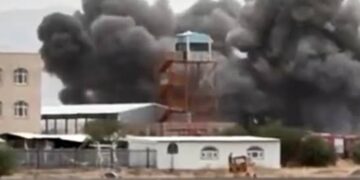
In February 2026, 37 miners died at Wase in Plateau State. Police said the miners were hit by a sudden discharge of lead oxide, sulphur, and carbon monoxide in a poorly ventilated space. The minister ordered the closure of the area covered by licence 11810, operated by Solid Unity Nigeria Limited. So the line between legal and illegal is not necessarily the line between safe and deadly.
How many have died? Nobody knows, because no agency keeps a national count. The documented incidents alone, including the approximately 400 children who died during the Zamfara lead-poisoning crisis, the 37 miners killed in Plateau State in February 2026, and the 37 detainees who died in Minna in September 2026, amount to at least 474 deaths. This is not a national death toll from illegal mining, because no comprehensive national database exists that allows such a calculation. Banditry and terror have killed thousands across the North West and North Central, but the share tied to mining has not been established, and any claim of a precise national toll should be treated with caution. That silence is itself a scandal.
Why does the government not act decisively? The evidence points to five reasons. Oversight is fragmented, so no agency owns the outcome. Ownership is hidden, so investigators cannot follow the money to a person. The trade’s profits dwarf the state’s revenue, so those with something to protect can outspend the law. Enforcement lands on the poor, who are easy to arrest, and rarely on sponsors, who are not. And armed groups now sit in the very places the state must enforce.
If the Minna inquiry ends with a suspended commandant and a committee report, the trade will continue exactly as before. Nigerians deserve the autopsy and toxicology findings, the detention register, the names and ages of everyone held, and a clear account of who gave which order. They also deserve the names of the licence holders, beneficial owners, and buyers behind the mining sites that led to those arrests, and an answer to what became of the sponsors the minister described.
The darkest story here is not the man holding the shovel. It is the system that makes the shovel profitable, and the silence that protects those who profit.
At least 37 men and boys died in a locked room in Minna. Nigeria should not look away.
Daniel Nduka Okonkwo is an investigative journalist, human rights advocate, and policy analyst based in Nigeria. He is the founder and publisher of Profiles International Human Rights Advocate (PIHRA), a platform documenting the courage of human rights defenders. His reporting on Nigerian governance, security sector accountability, and public finance has appeared in Sahara Reporters, Vanguard, Daily Trust, African Defence Forum, Opinion Nigeria, and Daily Intel.
Read more of his work on the PIHRA website:
https://www.profilesinternationalhumanrightsadvocate.com.ng/
For tips, feedback, or collaboration, contact him at dan.okonkwo.73@gmail.com.