























By Daniel Nduka Okonkwo
For months, the Presidency insisted that the Presidential Foreign Investment Promotion Council never existed. Official documents now in the public domain complicate that claim. They show that the Office of the Secretary to the Government of the Federation did not merely become aware of the council in passing. Registry stamps and correspondence indicate that it received documents bearing the council’s name, processed them through its official registry, and forwarded them to the Economic and Financial Crimes Commission for action, months before the Presidency publicly declared the body fictitious. These records raise a legitimate question: how did a government office come to formally process requests from an entity the Presidency now insists never legally existed?
At the centre of the paper trail is a letter dated November 21, 2024, signed by the Permanent Secretary, General Services Office, Nnamdi Maurice Mbaeri, on behalf of the Secretary to the Government of the Federation. Attached to the letter was a November 7, 2024 request from Prince Adeniyi Adeyemi, who identified himself as Director-General of the Presidential Foreign Investment Promotion Council, seeking office accommodation from recovered Federal Government properties.
Registry stamps indicate that the SGF’s office received the original request on November 12 and forwarded it to the EFCC nine days later under a covering letter titled “Request for Office Accommodation.” The letter informed the anti-graft agency that three government institutions, including the council, had applied for office space from recovered government assets. The request bore the reference number SH/DG/PFIPC/RQ/107, an internal tracking detail that suggests the correspondence was processed through official administrative channels.
In his request, Adeyemi described the council as a one-stop investment promotion agency established to coordinate foreign direct investment across ministries, departments, and agencies, liaise with government institutions, and serve as Nigeria’s central repository for investment data. Whether those representations were accurate is now a matter before the courts. What is clear from the documentary record is that the correspondence moved through official government channels without any publicly known indication that its authenticity had been questioned at that stage.
The matter has since taken a far more serious turn. Adeyemi is currently standing trial before the Federal High Court in Abuja on an eight-count charge, including conspiracy, forgery, and impersonation. Prosecutors allege that he forged a presidential appointment letter purportedly bearing the signature of the Chief of Staff to the President, Femi Gbajabiamila, and that he falsely presented himself as Director-General of the council.
Court documents further allege that he operated 34 bank accounts, including accounts allegedly opened in the names of purported government bodies, held meetings with foreign diplomats at a hotel in Abuja under the council’s banner, and wrote to the Ministry of Foreign Affairs requesting diplomatic assistance to facilitate United States visas for members of his purported staff. Investigators also allege that, following his arrest in October 2025, searches conducted at his office and residence in Suleja recovered documents, letterheads, and other materials alleged to bear forged presidential insignia.
Gbajabiamila has also been listed among the prosecution witnesses in a case centred on allegations that his office and signature were forged. Meanwhile, the Presidency, through its Special Adviser on Information and Strategy, Bayo Onanuga, has maintained that the Presidential Foreign Investment Promotion Council never legally existed. Presidential aide Temitope Ajayi has similarly stated that internal collaborators may have enabled the alleged scheme and that the government’s internal processes eventually exposed it.
That is precisely where the documentary record raises important questions. If the council were entirely fictitious, existing solely through documents produced by one individual, it would become harder to reconcile that position with records showing that the SGF’s registry received, stamped, recorded, and forwarded its request in the ordinary course of official business.
Additional claims have also entered the public debate. Human rights lawyer Femi Falana and opposition political parties have alleged that the council operated a .gov.ng domain for several months and formed part of a broader administrative footprint that allegedly included budgetary allocations reportedly amounting to 24 billion naira, an account said to have been opened with the Central Bank of Nigeria, and approval for 314 staff positions allegedly originating from the Office of the Head of the Civil Service of the Federation. These claims remain contested and have not been independently established by a court.
If substantiated, however, such allegations would suggest an operation that functioned within parts of the government bureaucracy rather than entirely outside it. They also coincide with reports that concerns were eventually raised by the Nigerian Investment Promotion Commission and the Ministry of Foreign Affairs, whose statutory responsibilities the council appeared to overlap, ultimately drawing greater official scrutiny to the matter.
Another unresolved aspect of the case concerns the death of Dolapo Babatunde Tanimola, whom investigators say Adeyemi identified during interrogation as the individual who allegedly assisted in procuring the disputed appointment letter. According to police accounts referenced in court proceedings, Tanimola died in a fire incident in Abuja before investigators could fully examine his alleged role. Opposition parties have cited this development among the reasons they are calling for an independent investigation.
The Presidency has pledged that anyone found to have collaborated in the alleged scheme will be identified and prosecuted, and has directed the Department of State Services, the Nigeria Police Force, and the EFCC to investigate the full extent of the matter.
Separately, Femi Falana has argued that the Presidency lacks constitutional authority to unilaterally exonerate any person connected with the controversy and has urged the Independent Corrupt Practices and Other Related Offences Commission to conduct an independent investigation into the allegations. The African Democratic Congress and the Nigeria Democratic Congress have also called for Gbajabiamila to step aside pending an independent inquiry, while a coalition of civil society organisations has requested investigations into the alleged Central Bank accounts and reported budgetary allocations linked to the Office of the Chief of Staff.
For its part, the EFCC has not publicly responded to requests for comment, while the Office of the Secretary to the Government of the Federation has reportedly indicated that it would review the relevant correspondence before making any public statement.
What is not in dispute is that official records show a government office receiving, stamping, recording, and forwarding correspondence bearing the name of a body that the same government now maintains never existed. Whether those records reflect an elaborate fraud that successfully exploited weaknesses in administrative procedure, or point to a deeper level of institutional recognition that has yet to be fully explained, remains a question for investigators and the courts to resolve, not one that political statements alone can settle. Until an independent and transparent investigation reconciles the documentary record with the official position, the public is left weighing two competing accounts, and that unresolved contradiction may prove to be the most consequential part of the entire controversy.
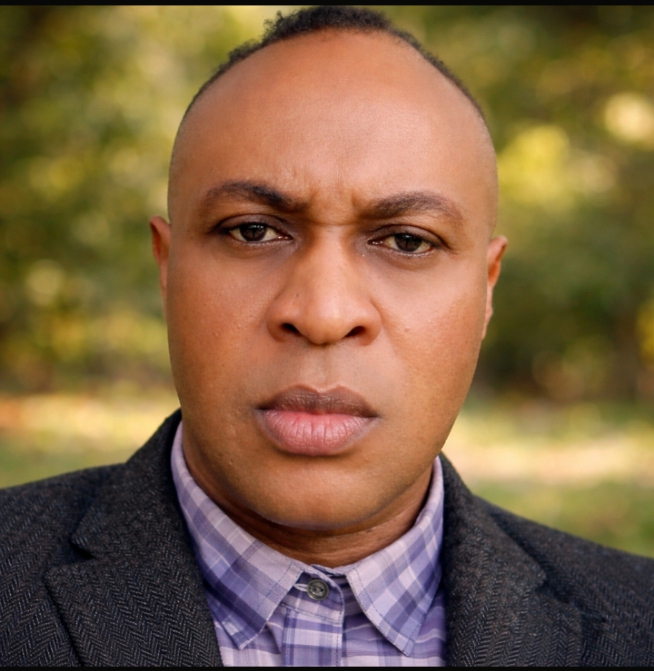
Daniel Nduka Okonkwo is an investigative journalist, human rights advocate, and policy analyst based in Abuja, Nigeria. He is the publisher of Profiles International Human Rights Advocate, a platform focused on accountability journalism, governance reporting, and the documentation of human rights issues across Africa. His work examines the intersection of political power, institutional accountability, systemic failure, and the human impact of corruption, with particular focus on Nigeria and the wider African continent.
Okonkwo’s reporting and analysis have been published in Sahara Reporters, African Defence Forum, Daily Trust, Vanguard, Daily Intel, Opinion Nigeria, African Angle, Local Newsbreak, and other international media outlets. His work is driven by a commitment to transparency, democratic governance, and justice. He also collaborates with Daniels Entertainment on human rights initiatives, extending his advocacy beyond traditional journalism into broader public engagement.
He is based in Abuja, Nigeria, and can be reached at dan.okonkwo.73@gmail.com.