

















By Daniel Nduka Okonkwo
The denial of accredited media access to the Federal High Court in Abuja during the ongoing trial of activist Omoyele Sowore raises profound concerns about Nigeria’s commitment to constitutional guarantees of press freedom and open justice. Security agencies such as the Department of State Services are mandated to safeguard national security, but the exclusion of some journalists from a public hearing, without clear justification, creates the perception of secrecy and undermines public confidence in judicial transparency. This incident, documented by multiple observers, implicates fundamental rights enshrined in Sections 22 and 39 of the 1999 Nigerian Constitution, as well as Nigeria’s obligations under international treaties including the International Covenant on Civil and Political Rights and the African Charter on Human and Peoples’ Rights. At stake is not merely the treatment of one journalist, but the broader public’s right to be informed about proceedings of national importance.
Journalists who arrived at the Federal High Court to cover the proceedings were stopped by DSS officers and denied entry, while international press, including a CNN crew, were waved through without difficulty. Local and national reporters, despite identifying themselves and presenting valid credentials, were turned away. No explanation was offered beyond an arbitrary directive that the officers present could not, or would not, justify when questioned. If journalists covering the news are treated as a threat, one might ask who the greater threat to national interest actually is. These were not isolated cases. Multiple journalists and members of the public attempting to attend the hearing were turned away in the same manner, raising questions about whether the restriction was deliberate policy rather than an isolated lapse.
This happened on the very day the presiding judge, Justice Mohammed Umar, restored Sowore’s bail with fresh conditions. The court ordered that Sowore provide two sureties, one a traditional ruler from his community and the other a person who owns landed property within the Federal Capital Territory, and directed that he be released to his lawyers pending the perfection of these conditions. The DSS is prosecuting Sowore on a two-count charge stemming from a social media post in which he allegedly described President Bola Tinubu as a criminal on his X and Facebook accounts. Sowore has pleaded not guilty.
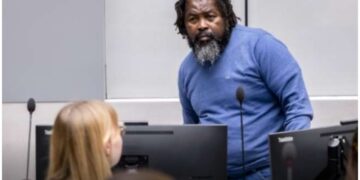
The case has followed a turbulent path in recent weeks. The court had earlier granted Sowore bail on a self-recognition basis. On June 16, Justice Umar revoked that bail and issued a warrant of arrest after Sowore failed to appear for the day’s proceedings, holding that the adjournment letter submitted on his behalf gave no reasons for his absence. On June 22, the judge ordered his remand at the Kuje Correctional Centre pending the hearing of an application challenging the bail revocation. The same sitting saw Justice Umar dismiss a separate application by Sowore seeking his recusal from the case on grounds of alleged bias. The restoration of bail, then, came at the end of a contested two-week stretch that tested both the defendant’s liberty and the court’s handling of the matter, and it was precisely this moment of heightened public interest that the DSS chose to seal off from the press. Footage circulating from the courthouse appeared to show Sowore being handled roughly by the very officers meant to protect him.
That timing makes the denial of access more troubling, not less. A case that had just seen a bail revocation, a remand order, a dismissed recusal application, and a restoration of bail with significant new conditions is exactly the kind of proceeding the Nigerian public has the strongest interest in seeing reported accurately and independently. The judiciary is constitutionally designed to be open, transparent, and accessible to the public and the press. When a security agency with no judicial authority unilaterally decides who may witness justice being administered, the courtroom ceases to function as an open court and becomes a space where proceedings unfold behind a curtain, shielded from public scrutiny. That should concern anyone who values judicial independence and the integrity of Nigeria’s constitutional order.
Denying credentialed journalists entry into an open court proceeding is not a minor administrative matter. It is a direct infringement on the public’s right to know and a breach of the open justice principle that underpins any functioning democracy. Such conduct violates Sections 22 and 39 of the 1999 Constitution, which guarantee the press its role in holding government accountable to the people and protect the right to freedom of expression. It also runs contrary to obligations Nigeria has assumed under international instruments to which it is a state party, including the International Covenant on Civil and Political Rights and the African Charter on Human and Peoples’ Rights, both of which protect press freedom and the public’s right to access information. When state agents acting outside their lawful mandate bar journalists from courtrooms, they obstruct the public’s ability to know what is happening in a case of major national significance, and they invite the kind of international scrutiny that follows democratic backsliding.
This incident does not stand alone. It is the latest entry in a documented pattern of conduct by the DSS throughout the course of the Sowore proceedings. Armed operatives have previously been recorded forcefully dragging Sowore within court premises, manhandling him, and ejecting him from the courtroom to prevent him from speaking to the press. During his initial arrest in Lagos, agents raided his apartment, damaged his vehicle, and seized his communication devices, in an operation during which Sowore and his brother were assaulted, leaving his brother with head and leg injuries. Sowore has testified to being thrown onto a cold floor, locked away, and denied contact with legal counsel and family for extended periods, circumstances that in 2019 drove him to a hunger strike simply to compel the authorities to allow him access to a lawyer. The DSS has, on past occasions, opened internal probes into the conduct of its personnel following public backlash over these courtroom ejections, yet the pattern of obstruction, now extending to the press, continues. This is not unique to the past administration. It is a fair expectation that a government led by a man who once fought for democracy, freedom of speech, and human rights would govern by exemplary standards rather than repeat the abuses of the past.
This pattern fits within a broader history of allegations against the DSS that have drawn scrutiny from civil society and the courts. The Socio-Economic Rights and Accountability Project has accused DSS officials of unlawfully occupying its Abuja and Lagos offices after the organisation called for investigations into alleged corruption at the Nigerian National Petroleum Company Limited, an allegation the DSS has denied, describing the visit as a routine and unarmed liaison. The family of former Kaduna State Governor Nasir El Rufai has accused the agency of disregarding subsisting court orders concerning his detention. Civil society groups have repeatedly alleged that the DSS ignores judicial rulings ordering the release of detainees or the return of confiscated property. The agency has, to its credit, in some instances acknowledged past wrongs, releasing and compensating individuals such as Nura Idris, Yau Mohammed, and Chineze Ozoadibe following internal reviews of their detention. But acknowledgment after the fact does not excuse a recurring institutional habit of acting beyond its lawful mandate, whether against detainees, civil society organisations, or now the press. No one should be above the law, least of all armed officers stationed at a courthouse gate to bar ordinary citizens who came only to observe a democratic process. As an investigative journalist and human rights advocate whose credentials are a matter of public record, I was personally denied access that day. I find the directive that kept me out unprofessional, arbitrary, and indefensible.
It is worth recalling what the agency’s actual mandate is. The DSS traces its institutional origins to the Special Branch established within the Nigeria Police Force in the colonial period, and was formally created in its present form in June 1986 under Military President Ibrahim Babangida, following the dissolution of the Nigerian Security Organisation into three successor agencies: the DSS, the National Intelligence Agency, and the Defence Intelligence Agency. Its statutory functions are the detection and prevention of crimes against Nigeria’s internal security and the investigation of threats such as terrorism, espionage, and sabotage. Under its current leadership, the agency has stated a shift toward proactive, intelligence-driven operations and the lawful prosecution of suspects through constitutionally recognised courts, with an emphasis on communities serving as a first line of defense given the strain on Nigeria’s security forces. Nowhere within that mandate is there a provision for DSS personnel to station themselves at courthouse gates and determine, on their own authority, which journalists and which Nigerians may witness public proceedings. That is the work of the court, not an agency built for intelligence and internal security. Preventing journalists and members of the public from entering a courtroom is not the detection or prevention of crime. It is a naked overreach and an embarrassment to the system, and it is obstruction of justice in its most literal, physical sense.
The judiciary must reckon with what it is permitting within its own walls. If judges and court officials allow security operatives to control who enters their courtrooms, they cede a measure of judicial independence to an agency whose core mandate is intelligence and internal security, not court administration or access control. Nigeria has not descended into the territory of states like North Korea or Eritrea, countries that have shrunk their democratic space to a vanishing point, where independent media is banned except for outlets willing to serve as instruments of the state, where communications are monitored without restraint, and where dissenting speech is met with severe punishment. Nigerians should resist any drift in that direction. But every incident of this kind, journalists turned away at a courthouse gate on the same day a high-profile bail decision is handed down, moves the country a step closer to the kind of state control that no constitutional democracy can afford to normalise. Nigerians deserve courts that remain open in practice and not merely in name, and a press that is free to bear witness to how justice is actually administered in their country. Let the record state this plainly: Any actions by state governments, federal agencies, or the ruling class to intimidate judges or the citizens, override due process, or treat judicial authority as optional are not the acts of a democracy in good standing. They are the warning signs of one in retreat.
Daniel Nduka Okonkwo is an investigative journalist, human rights advocate, and policy analyst based in Abuja, Nigeria. He is the publisher of Profiles International Human Rights Advocate, a platform focused on accountability journalism, governance reporting, and the documentation of human rights issues across Africa. His work examines the intersection of political power, institutional accountability, systemic failure, and the human impact of corruption, with particular focus on Nigeria and the wider African continent.
Okonkwo’s reporting and analysis have been published in Sahara Reporters, African Defence Forum, Daily Trust, Vanguard, Daily Intel, Opinion Nigeria, African Angle, Local Newsbreak, and other international media outlets. His work is driven by a commitment to transparency, democratic governance, and justice. He also collaborates with Daniels Entertainment on human rights initiatives, extending his advocacy beyond traditional journalism into broader public engagement.
He is based in Abuja, Nigeria, and can be reached at dan.okonkwo.73@gmail.com.