




























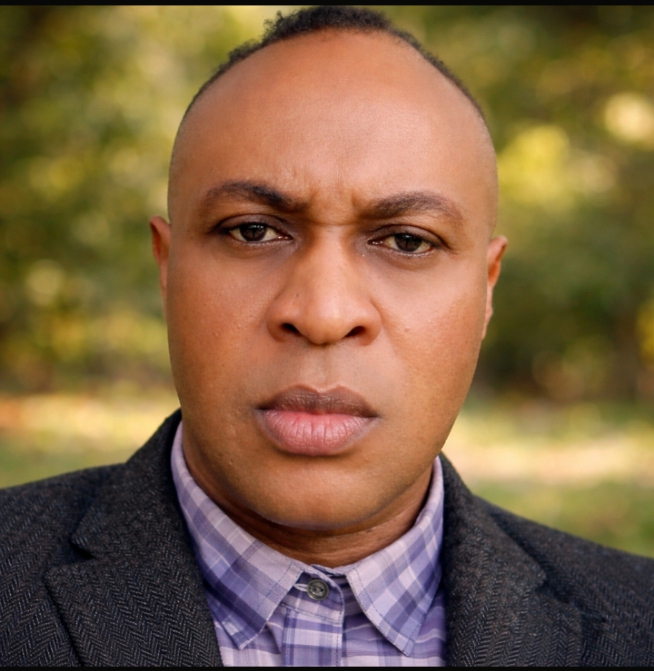
By Daniel Nduka Okonkwo
This article is not about Michael Jackson, Joe Jackson, or the Jackson family alone. It is about millions of fathers across the world, men whose sacrifices are too often invisible, whose devotion is too easily dismissed, and whose worth is measured only in paychecks rather than presence. These fathers pour themselves into the quiet labor of providing, protecting, and shaping futures, yet their love is overshadowed, their struggles silenced, and their humanity overlooked. In the shadows of celebration, they endure emotional isolation, hidden exhaustion, and the crushing weight of expectations that deny them tenderness. They give everything they never had so their children might live better lives, but in return they are met with muted gratitude, leaving generations of men to wrestle with the paradox of being essential yet unacknowledged.
Joe Jackson died in 2018, having built one of the most successful musical dynasties the world has ever seen, yet he died largely estranged from many of the very children whose careers he helped build. That contradiction, a man widely credited with helping his children rise from poverty and obscurity, yet whose contribution to their success is often viewed through the lens of the controversies surrounding his parenting, sits at the heart of a question society rarely asks honestly: What do fathers actually go through in the process of raising children who go on to thrive, and why is so little of that labor acknowledged once the thriving begins?
In the early 1960s, Joe Jackson formed a band around his sons Jackie, Tito, and Jermaine, and soon recognized that his younger son, Michael, possessed a voice capable of carrying the family further than any of them had imagined. He enforced hours of daily rehearsal to sharpen their harmonies and tighten their choreography. He personally booked their earliest performances around Gary, Indiana, before securing the audition that led to their contract with Motown in 1968. He later supported the careers of Randy and Janet. There is no version of the Jackson family’s rise to international fame that does not begin with Joe Jackson’s relentless determination.
That drive came at a cost that cannot and should not be minimized. Joe Jackson enforced discipline through physical punishment, and several of his children later spoke publicly about the trauma they experienced growing up. Michael Jackson dismissed his father as his manager in 1979, and other members of the family eventually followed. When Michael died in 2009, Joe was not included in his will. Joe Jackson himself died in June 2018 at the age of eighty-nine.
None of that abuse deserves defending, and this article offers no such defense. The Jackson story is compelling precisely because it forces us to hold two difficult truths at the same time. A father can inflict genuine harm on his children, and a father can also play a decisive role in creating the opportunities that transform their lives. Joe Jackson viewed his strictness as preparation for a world he believed would offer his Black children few second chances. Whether one accepts or rejects that reasoning, the broader question remains relevant far beyond the Jackson family.
Fatherhood, in practice, is often reduced to a single function: provider. A man works. A man pays the bills. If the bills are paid, society frequently assumes its duty has been fulfilled. What this accounting ignores is everything else required to raise children who become capable, disciplined, resilient, and confident adults. Research has consistently found that children with actively engaged fathers often demonstrate stronger educational outcomes, healthier social development, and greater self-confidence than children who grow up without meaningful paternal involvement. Fatherhood is not merely financial. It is emotional, intellectual, moral, and deeply personal.
Yet another dimension of fatherhood receives even less attention: its long-term financial consequences. Across the world, fathers routinely postpone their own ambitions, deplete savings, refinance or sell family assets, delay retirement, and work years longer than they had planned so their children can receive better education, healthcare, housing, and opportunities. They do so willingly because love often demands sacrifice. Yet many reach old age with little financial security because they invested almost everything in the next generation while investing too little in themselves.
Recent global research reinforces this reality. Equimundo’s State of the World’s Fathers 2026 reports that fathers are taking on more caregiving responsibilities than ever before while simultaneously facing increasing financial pressure, limited institutional support, and mounting anxiety about their families’ future. The report concludes that fathers remain deeply committed to caring for their families, but that many are being stretched to their emotional, physical, and financial limits.
The emotional accounting of family life rarely reflects this work. Mother’s Day is celebrated with enormous cultural enthusiasm, reflecting a long history of recognizing maternal caregiving. Father’s Day, although meaningful, often receives significantly less attention. The imbalance extends beyond greeting cards and family dinners. It reflects a deeper assumption that mothers are the emotional heart of the family, while fathers exist primarily as its financial infrastructure.
That assumption comes at a considerable cost. In many societies, including across much of Africa, a man’s value is still measured largely by his earning capacity. Fathers, therefore, learn to express love through provision rather than conversation, sacrifice rather than vulnerability, and protection rather than emotional openness. Many quietly carry the burden of believing that their worth depends entirely on what they can provide.
Mental health professionals have increasingly warned about the consequences of these expectations. Many fathers experience anxiety, depression, loneliness, chronic stress, and emotional exhaustion but remain reluctant to seek help because vulnerability is too often interpreted as weakness. Their struggles frequently remain invisible until retirement, financial hardship, or declining health exposes years of silent suffering.
Another painful reality is that many fathers eventually discover that decades of financial sacrifice alone do not guarantee lasting emotional closeness with their children. During childhood, fathers often occupy the role of disciplinarian and provider while mothers may spend more day-to-day time nurturing emotional bonds. As children become adults, those emotional relationships frequently influence whom they naturally turn to in later life.
Family specialists have also observed that unresolved parental conflict following separation or divorce can sometimes affect children’s relationships with one parent. In some families, children become emotionally distant from their fathers because of years of conflict, competing narratives, or poor communication between adults. In others, fathers themselves acknowledge that years devoted almost exclusively to providing financially left too little time to build deep emotional relationships with their children. Every family’s circumstances are unique, and responsibility rarely rests with one person alone.
Another issue that has attracted growing public attention in Nigeria is the discovery by some men, often through DNA testing conducted during immigration or medical procedures, that children they have raised are not biologically theirs. While such cases represent only a fraction of families, they have sparked intense national debate because they reveal the profound emotional and financial consequences that deception can have within intimate relationships. For affected fathers, the pain extends beyond biology. It encompasses years of emotional investment, financial sacrifice, and a painful reassessment of trust, identity, and family.
There is a peculiar cruelty in a pattern where a man spends decades laying the foundation upon which his children stand, only to find himself gradually written out of the story once they no longer depend upon that foundation. It appears in ordinary homes where fathers quietly finance education, housing, healthcare, and opportunity, only to discover that their contributions are remembered less vividly than the emotional moments they were too busy working to create.
This is not an argument against celebrating mothers. Mothers deserve the recognition they receive. Rather, it is an appeal to acknowledge that fathers, flawed, imperfect, and human, also carry burdens that are too rarely seen or appreciated.
Joe Jackson will rightly remain a cautionary example of the damage that abusive parenting can inflict. Yet his life should not be reduced to a single narrative. He helped create opportunities his children might otherwise never have enjoyed, even as aspects of his parenting caused profound pain. Both truths deserve recognition.
His story reflects a wider reality lived quietly by millions of fathers who will never become famous enough for their sacrifices to be debated. Many will simply grow old, retire with depleted savings, battle loneliness in silence, and wonder whether anyone truly noticed what they gave.
For that reason, society must broaden its understanding of responsible fatherhood. A good father should certainly sacrifice for his children, but he should also safeguard his own future. Retirement planning, pension contributions, investments, savings, health insurance, estate planning, and maintaining meaningful relationships are not acts of selfishness. They are acts of wisdom. A father who secures his own future is less likely to become financially dependent or emotionally vulnerable in old age.
Equally important, fathers should remember that financial provision alone is not enough. Children remember conversations, shared experiences, affection, guidance, and emotional availability just as much as they remember school fees and household expenses. Building those bonds while children are growing up may become one of the greatest investments a father ever makes.
The hidden truth about fatherhood is not that fathers deserve greater honour than mothers. It is that many fathers carry burdens that remain largely unseen until age, illness, or retirement reveals the price they quietly paid. A society that celebrates only what fathers provide while overlooking who they are as human beings ultimately fails both fathers and their children.
The unseen hand of fatherhood deserves more than gratitude expressed after a funeral. It deserves recognition while fathers are still alive, opportunities to be emotionally present as well as financially responsible, and the freedom to prepare for old age without guilt. Children should honour the sacrifices of both parents. Fathers, meanwhile, must remember an uncomfortable but necessary truth: providing for your children should never require sacrificing your own dignity in old age. The greatest legacy a father leaves is not only successful children, but also the example of a life lived with wisdom, balance, foresight, and self-respect.
Daniel Nduka Okonkwo is an investigative journalist, human rights advocate, and policy analyst based in Abuja, Nigeria. He is the publisher of Profiles International Human Rights Advocate, a platform focused on accountability journalism, governance reporting, and the documentation of human rights issues across Africa. His work examines the intersection of political power, institutional accountability, systemic failure, and the human impact of corruption, with particular focus on Nigeria and the wider African continent.
Okonkwo’s reporting and analysis have been published in Sahara Reporters, African Defence Forum, Daily Trust, Vanguard, Daily Intel, Opinion Nigeria, African Angle, Local Newsbreak, and other international media outlets. His work is driven by a commitment to transparency, democratic governance, and justice. He also collaborates with Daniels Entertainment on human rights initiatives, extending his advocacy beyond traditional journalism into broader public engagement.
He is based in Abuja, Nigeria, and can be reached at dan.okonkwo.73@gmail.com.