






























By Daniel Nduka Okonkwo
In a dramatic collision of law, politics, and diplomacy, the International Criminal Court’s arrest warrant for Israeli Prime Minister Benjamin Netanyahu highlights the practical limits of international justice. Without its own enforcement arm, the ICC depends entirely on the cooperation of member states. In the United States, which does not recognize the Court’s jurisdiction, the warrant is unlikely to be enforced. Legal experts have dismissed recent calls for local enforcement as politically unrealistic, emphasizing that foreign affairs and the enforcement of international legal obligations fall under federal authority, not municipal governments. At the same time, questions surrounding the legal protections afforded to sitting heads of government and the United States’ longstanding position on the ICC further complicate the issue. The case reemphasizes a broader reality that, without sufficient international cooperation and political support, even significant decisions of international tribunals can face substantial obstacles to enforcement.
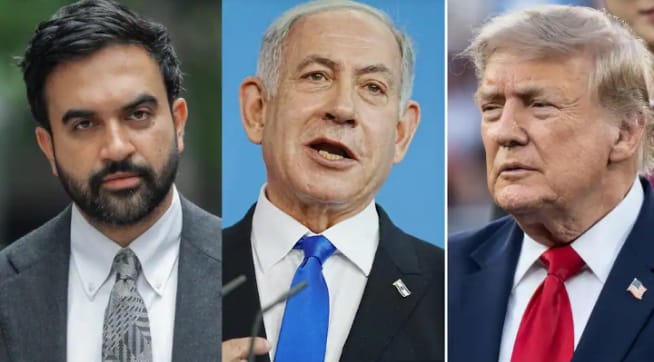
The debate over whether political leaders can be arrested while traveling abroad has once again captured international attention, following renewed discussions surrounding the International Criminal Court arrest warrant for Israeli Prime Minister Benjamin Netanyahu and public remarks by politicians in the United States suggesting he could face arrest if he visited New York. The controversy has reignited broader questions about the relationship between international criminal law, diplomatic immunity, national sovereignty, and the practical limitations of enforcing international justice. Despite widespread public assumptions, the legal reality is considerably more complex.
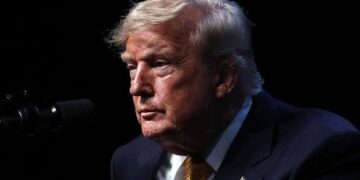
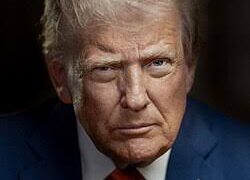
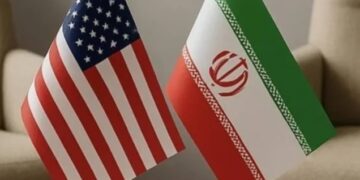
US President Donald Trump declared on Monday that Israeli Prime Minister Benjamin Netanyahu “will not be arrested in any way, shape, or form while in the United States of America,” reaffirming his administration’s position that the United States would not enforce the International Criminal Court’s arrest warrant against the Israeli leader. Trump’s statement underscored Washington’s longstanding refusal to recognize the ICC’s jurisdiction over U.S. citizens and key allies, while signaling continued political and diplomatic support for Netanyahu during any visit to the United States.
Experts are largely in agreement that the Mayor of New York City does not possess the constitutional or statutory authority to arrest a visiting foreign head of government or to execute an International Criminal Court warrant. Foreign policy, diplomatic relations, treaty obligations, and matters involving foreign leaders fall exclusively within the jurisdiction of the United States federal government. Municipal authorities cannot independently conduct foreign affairs or implement international legal obligations on behalf of the United States. Even where local police agencies cooperate with federal authorities in certain circumstances, they cannot independently decide to arrest a visiting foreign leader based solely on an ICC warrant. For this reason, legal experts have described suggestions that a New York mayor could personally order such an arrest as political rhetoric rather than a legally enforceable position.
The legal position of the United States further complicates the issue. The United States is not a State Party to the Rome Statute, the treaty establishing the International Criminal Court. Consequently, it does not generally recognize the ICC’s jurisdiction over its nationals or regard itself as legally bound by the Court’s arrest obligations under the treaty. This does not necessarily prevent cooperation with the ICC in particular circumstances, but it means there is no automatic domestic legal obligation for United States authorities to execute every ICC arrest warrant.
Under customary international law, sitting heads of state, heads of government, and certain senior officials generally enjoy immunity from the criminal jurisdiction of foreign domestic courts while in office. The International Court of Justice affirmed this principle in its landmark 2002 Arrest Warrant judgment, Democratic Republic of the Congo versus Belgium, emphasizing that serving senior state officials ordinarily enjoy immunity from foreign criminal jurisdiction during their tenure. This immunity exists not as a personal privilege but as a protection for state sovereignty and the effective conduct of international relations. The principle ensures that diplomatic engagement between nations can continue without foreign leaders facing politically motivated legal actions whenever they travel abroad. Although the Vienna Convention on Diplomatic Relations primarily governs accredited diplomats, broader customary international law, and in some circumstances the 1969 UN Convention on Special Missions, recognizes protections for senior state officials undertaking official international missions. The exact legal basis may vary depending on the circumstances and the states involved.
The Rome Statute introduced one of the most significant developments in international criminal law. Article 27 provides that official capacity, including being a head of state or government, does not exempt an individual from criminal responsibility before the ICC. As a result, the Court may issue arrest warrants against sitting presidents or prime ministers accused of genocide, war crimes, crimes against humanity, or the crime of aggression. However, issuing a warrant is only one part of the process. The ICC has no police force, military, or independent enforcement agency. It depends almost entirely on cooperation from States Parties and, in some cases, voluntary assistance from non-member states. Consequently, an arrest warrant is only as effective as the willingness of governments to execute it. Political alliances, diplomatic considerations, security interests, and domestic legal frameworks often determine whether an ICC warrant is enforced.
The interaction between customary international law and treaty obligations remains one of the most debated issues in international jurisprudence. Countries that ratify the Rome Statute undertake obligations to cooperate with the ICC, including, in principle, executing arrest warrants issued by the Court. At the same time, customary international law traditionally grants immunity to sitting heads of state. The resulting tension has generated significant legal debate and differing interpretations among courts and governments, particularly where ICC arrest warrants concern leaders of states that are not parties to the Rome Statute. This explains why international arrest warrants are sometimes enforced in one country but ignored in another.
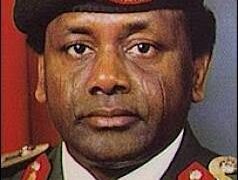
Contrary to some public speculation, the ICC has not issued arrest warrants for any prominent Nigerian political leader. The Court opened a preliminary examination into the situation in Nigeria in November 2010, focused on alleged crimes committed by Boko Haram and by Nigerian security forces in the course of that conflict. In December 2020, the Office of the Prosecutor concluded that examination, stating that there was a reasonable basis to believe war crimes and crimes against humanity had been committed by both parties, a finding that ordinarily would trigger a request to judges to open a full investigation. That request has still not been made. Nigerian authorities have continued to engage the Court’s Office of the Prosecutor on the question of genuine domestic accountability, but no formal ICC investigation into Nigeria has been authorized, and no arrest warrants have followed. Where Nigerian citizens are wanted internationally for offences such as cybercrime, drug trafficking, human trafficking, or financial crimes, those cases are generally pursued through INTERPOL cooperation and bilateral extradition arrangements rather than through the International Criminal Court. INTERPOL and the ICC perform fundamentally different functions. INTERPOL facilitates international police cooperation regarding ordinary criminal offences, while the ICC prosecutes only genocide, war crimes, crimes against humanity, and the crime of aggression.
Within Nigeria, Section 308 of the 1999 Constitution grants immunity from civil and criminal proceedings only to a serving President, Vice President, Governor, and Deputy Governor. Once they leave office, that constitutional immunity expires. Former presidents may therefore be investigated, prosecuted, or sued where sufficient legal grounds exist. However, the absence of constitutional immunity does not automatically result in prosecution. Investigations require credible evidence, prosecutorial discretion, political will, and compliance with applicable domestic or international legal procedures. International prosecution presents an even higher threshold, requiring jurisdiction under international law, admissible evidence, and effective international cooperation.
The effectiveness of international criminal justice ultimately depends less on legal theory than on political reality. The ICC may issue arrest warrants, but it lacks the power to execute them independently. Member states are expected to cooperate, yet compliance has varied considerably depending on diplomatic relationships, geopolitical interests, and domestic political calculations. This institutional limitation explains why individuals subject to ICC warrants have, in some instances, continued to travel internationally without arrest, while others have been detained on entering jurisdictions willing to enforce the Court’s decisions.
International justice remains one of the most ambitious developments in modern law, but it operates within a world still governed by sovereign states. Diplomatic immunity, constitutional authority, treaty obligations, customary international law, and political considerations frequently intersect, producing outcomes that appear contradictory to the public. The debate surrounding the arrest of visiting leaders illustrates a broader reality: international law does not function in isolation, and its effectiveness ultimately depends on the willingness of states to translate legal obligations into political action. International institutions possess independent enforcement mechanisms, and until states consistently honour their legal commitments, the gap between international justice and practical enforcement is likely to remain one of the defining challenges of global governance.
Daniel Nduka Okonkwo is an investigative journalist, human rights advocate, and policy analyst based in Abuja, Nigeria. He is the publisher of Profiles International Human Rights Advocate, a platform focused on accountability journalism, governance reporting, and the documentation of human rights issues across Africa. His work examines the intersection of political power, institutional accountability, systemic failure, and the human impact of corruption, with particular focus on Nigeria and the wider African continent.
Okonkwo’s reporting and analysis have been published in Sahara Reporters, African Defence Forum, Daily Trust, Vanguard, Daily Intel Newspaper, Opinion Nigeria, African Angle, Local Newsbreak, and other international media outlets. His work is driven by a commitment to transparency, democratic governance, and justice. He also collaborates with Daniels Entertainment on human rights initiatives, extending his advocacy beyond traditional journalism into broader public engagement.
He is based in Abuja, Nigeria, and can be reached at dan.okonkwo.73@gmail.com.